Archetype Pantheon
A contemporary mythological system can map core human emotions and developmental drives onto modernized archetypal figures, turning abstract psychology into a coherent relational canon for modern symbolic storytelling.
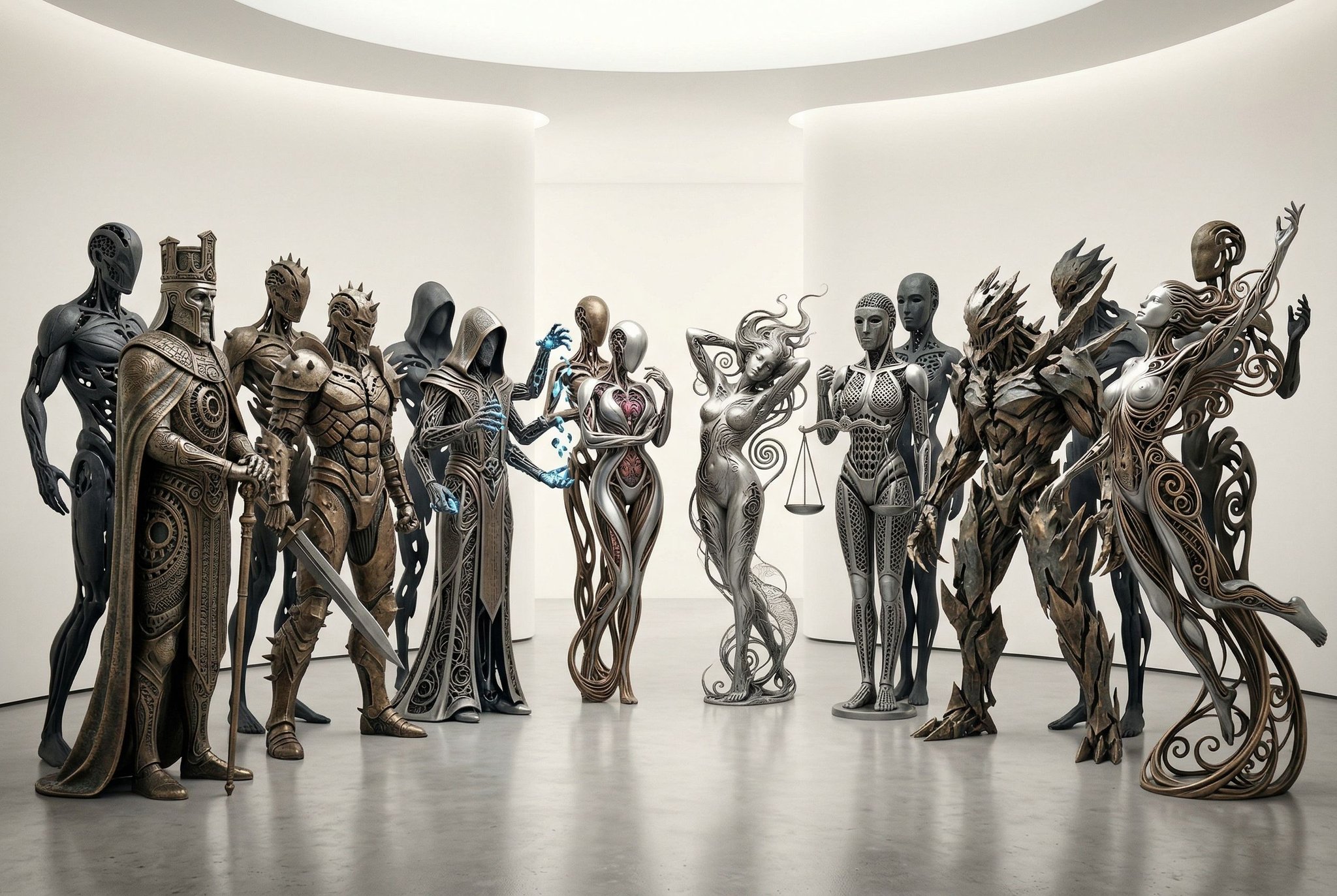
Mythology has always functioned as compressed psychology.
Premise
- Gods and heroes once served as interfaces for fear, duty, lust, courage, grief, ecstasy, and order.
- Modern culture still carries the same drives, but lacks a coherent symbolic system to hold them.
- The goal is to build a new canon where archetypes and emotional forces become legible, memorable beings.
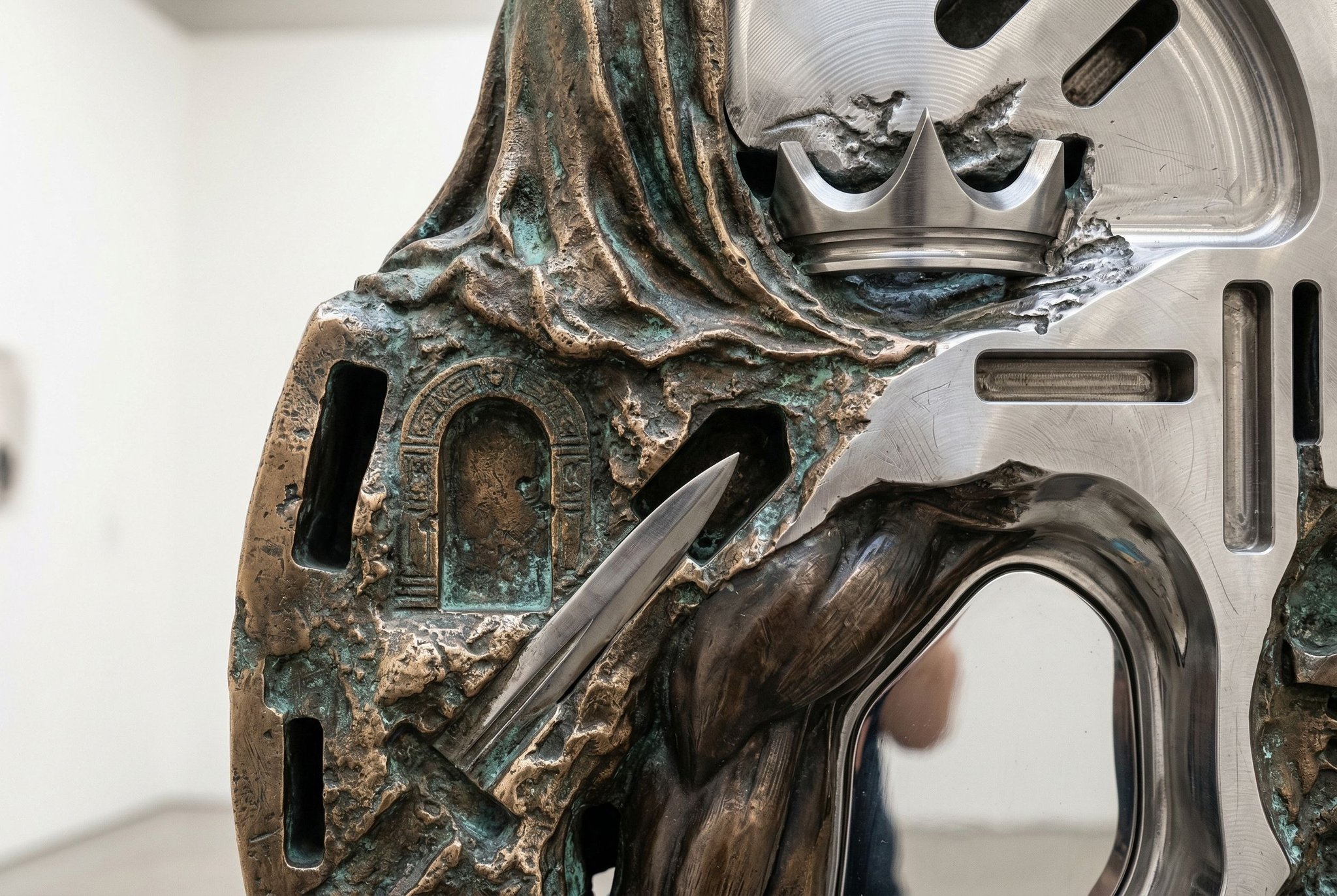
Mechanism
- Primary Pantheon
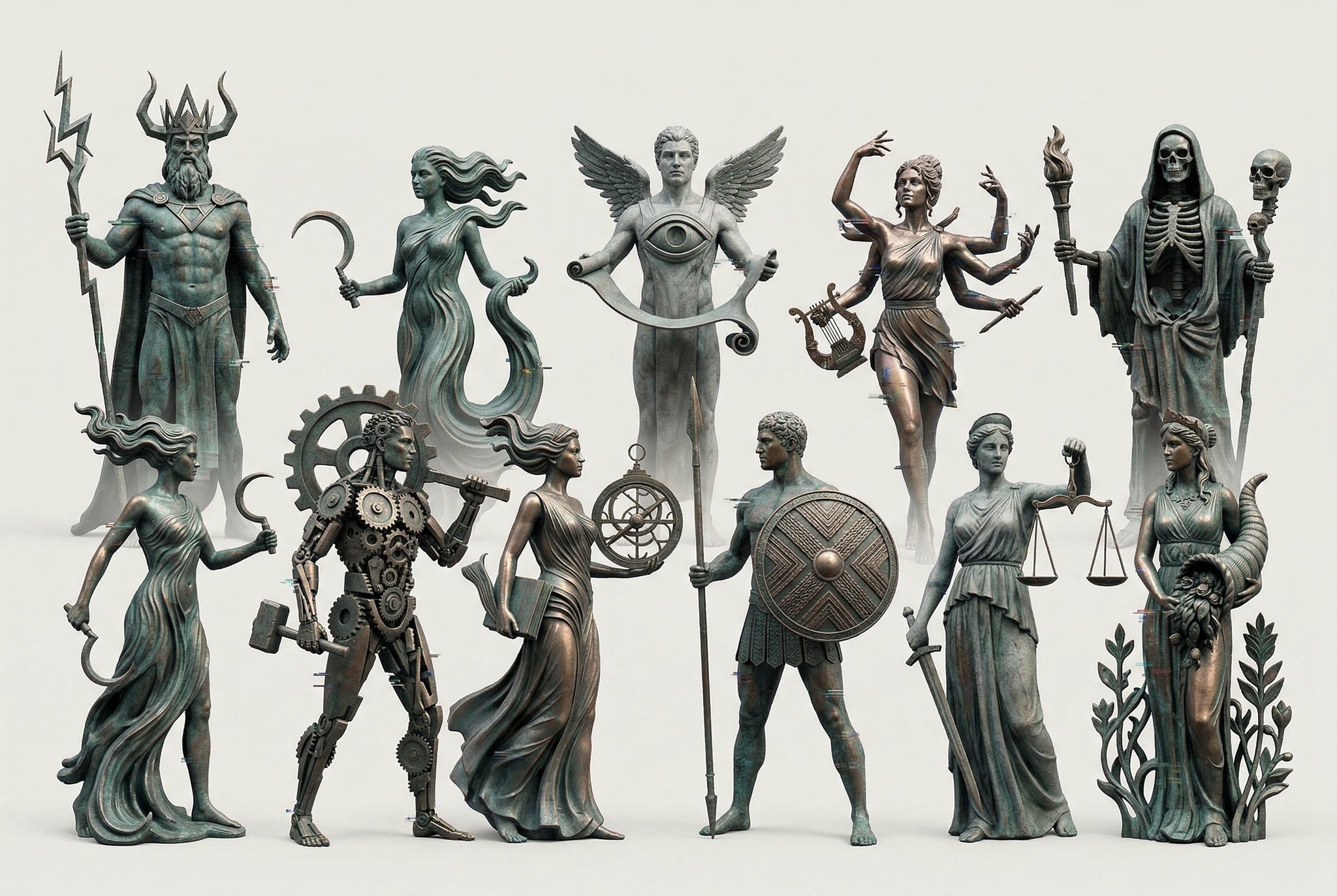
- Start with 8-12 core figures rather than a sprawling universe.
- Role Archetypes
- Sovereign, warrior, magician, lover, dreamer, muse — with judge and destroyer treated as derived offices or shadow stations.
- Emotional Mapping
- Emotions such as jealousy, shyness, fear, joy, lust, rage, or tenderness appear as shadows, masks, subordinate spirits, or transformation states.
- Character Logic
- Each figure is defined by core drive, shadow form, social function, symbolic domain, and transformation path.
- System Coherence
- Figures only become real when their oppositions, alliances, and inversions are explicit.
Why This Structure
- Primary domains should represent durable organizing forces.
- Volatile states such as jealousy or ecstasy work better as shadows, masks, or threshold beings.
- Example:
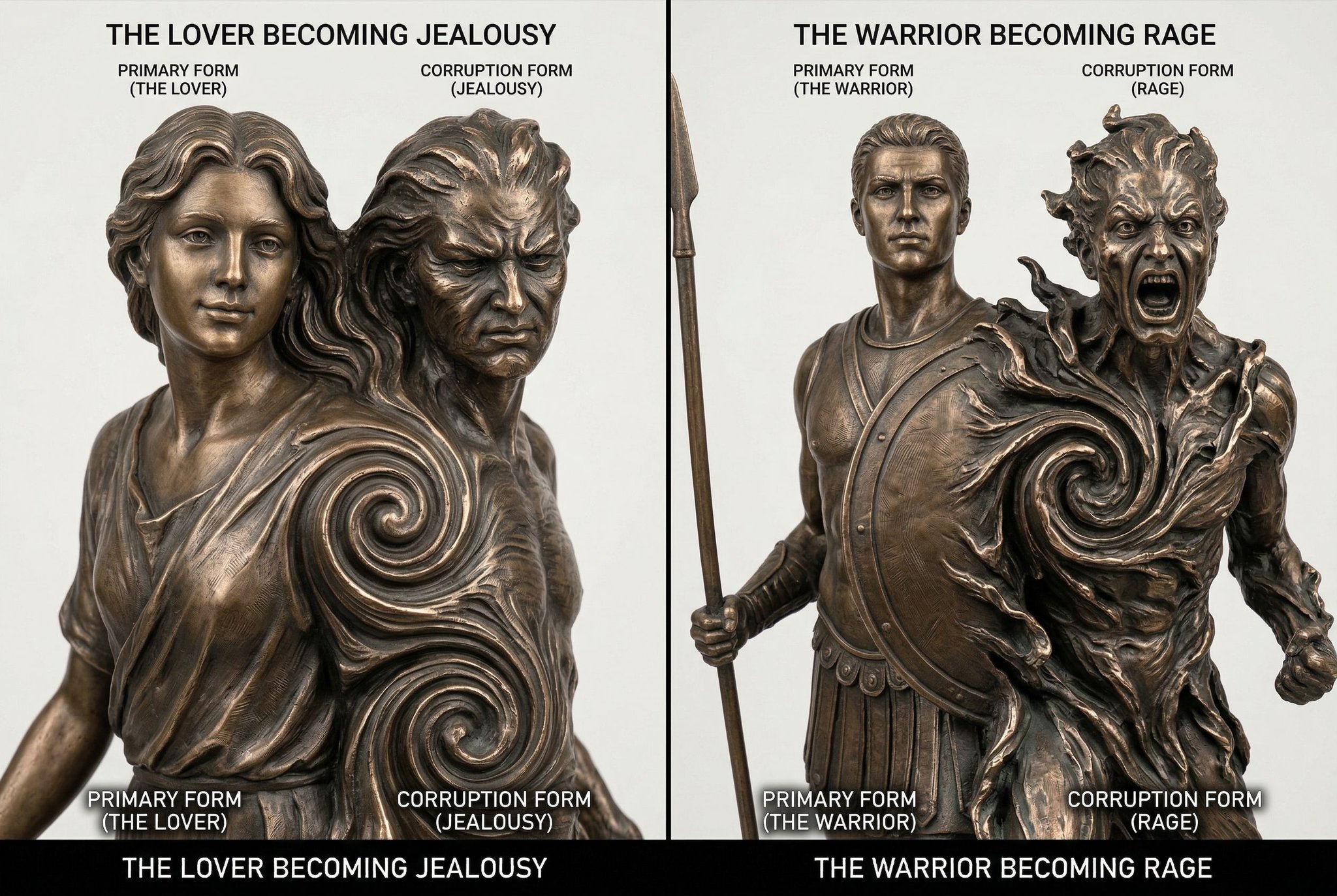
- jealousy as the lover’s shadow
- rage as the warrior’s excess
- shyness as the dreamer’s retreat
- ecstasy as a threshold state rather than a stable identity
- This keeps the pantheon psychologically believable.
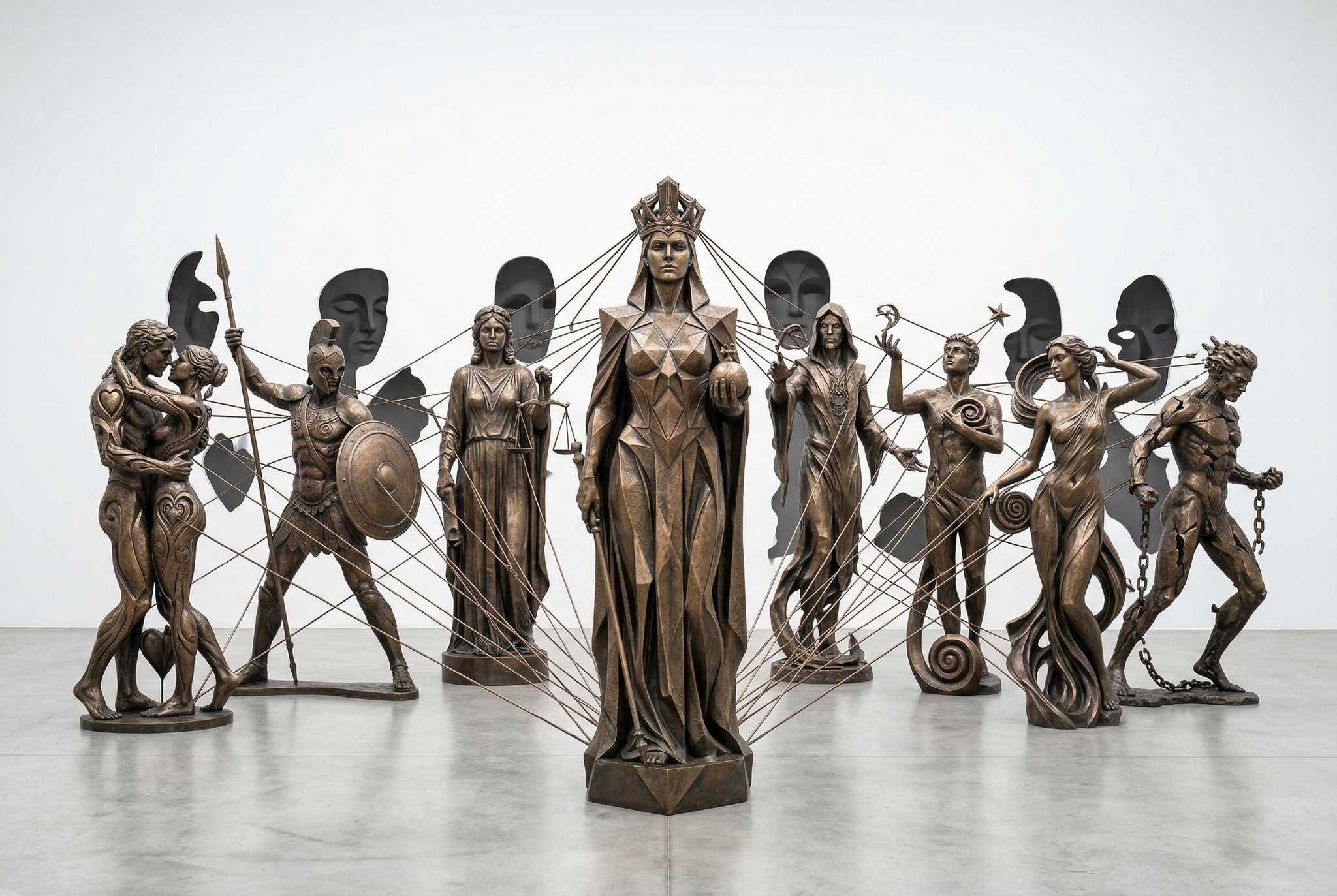
Design Rules
- Core domain
- Shadow and corruption form
- Symbol set
- Silhouette and material language
- Gesture and movement logic
- Relationship map inside the canon
- Mythic function in scenes of conflict, seduction, vision, rule, or sacrifice
- Naming should follow a coherent logic — functional, poetic, or liturgical — rather than ad hoc fantasy naming.
- Visual consistency should be maintained through recurring material logic, symbolic geometry, and ritual color hierarchies across the pantheon.
- Example: The Sovereign governs order and responsibility; shadow form becomes tyranny and paralysis; symbols are crown, threshold, and scale; silhouette broad, vertical, immovable; narrative function is to stabilize or overconstrain the world.
- Counter-example: The Lover governs attraction and union; shadow form becomes possession and jealousy; symbols are veil, mirror, and wound; silhouette fluid, asymmetrical, inviting yet dangerous.
First Execution Path
- Build the primary pantheon first.
- Stress-test it through a short myth cycle:
- order versus desire
- courage versus fear
- knowledge versus illusion
- intimacy versus possession
- hope versus melancholy
- Each figure should map to a rite or developmental threshold: coronation, initiation, seduction, exile, revelation, sacrifice, return.
- Secondary entities should emerge from these tensions, not be invented in isolation.
Why It Matters
- The system can support character design, game lore, ritual aesthetics, fashion, sculpture, and potentially therapeutic symbolic frameworks.
- Its value is mnemonic as much as narrative. People remember beings more easily than abstractions.
Trade-offs
- Richer than a fantasy roster, but harder to keep coherent.
- More meaningful than direct myth imitation, but less immediately familiar.
- Psychological nuance improves depth, but slows design decisions.
- Symbolic systems degrade quickly if visual language outruns relational logic.
- The canon must remain structurally original and avoid superficial borrowing from living sacred traditions or direct mythological pastiche.
Strategic Edge
- The value is not any one character.
- It is the pantheon as a symbolic operating system for character, ritual, and narrative generation.
- If the canon holds under narrative pressure, it becomes a generative base for worlds, rites, artifacts, and stories without losing internal coherence.
Generation Prompts
Image Prompt A contemporary mythological pantheon arranged in a dark ceremonial space, eight to twelve archetypal beings arranged by mirrored opposition with shadow doubles beginning to emerge or shed from the primary figures, radically different silhouettes yet one unified symbolic design language, sovereign in austere monumental regalia, warrior with controlled violence, magician with luminous ritual geometry, lover with dangerous elegance, dreamer in melancholic transcendence, premium cinematic lighting, hyper-detailed, timeless and modern.
Video Prompt Slow cinematic procession through a mythic hall as archetypal figures emerge one by one from shadow, their shadow doubles briefly emerging, crossing, and receding as symbolic tension lines pulse between them, each revealing distinct posture, material language, and emotional force, dark ceremonial atmosphere, crisp volumetric light, restrained epic motion.
Constraints & Non-Goals
- -Every figure must serve a structural role in a larger symbolic system rather than function as an isolated fantasy character.
- -The canon should synthesize timeless archetypes into a new mythology rather than imitate existing traditions directly.
- -Emotional states must be rendered with contradiction and transformation, not reduced to one-note stereotypes.
- -The first release should stay compact, with a rigorous core pantheon before secondary entities or world expansion.
Feasibility Gradient
The project is highly viable as a design system because its raw materials already exist across mythology, psychology, ritual, and character design. The real challenge is not invention but coherence. Archetypes become cliché when they are reduced to traits instead of being built as relational symbolic beings with drives, shadows, and transformation paths. A credible first version is a compact pantheon of 8-12 primary figures, each defined by core domain, shadow form, social role, visual language, and oppositional relationships, followed by secondary emotional masks or subordinate entities derived from that structure.
Next Actions
- Define the 8-12 primary figures and assign each a core drive, shadow, and emotional domain.
- Build a relational map showing oppositions, complements, and transformation pathways across the pantheon.
- Create design sheets covering silhouette, materials, symbols, gesture language, naming logic, and ritual function for each figure.
- Develop a first myth cycle that stress-tests the system through conflict, alliance, seduction, betrayal, sacrifice, and return.
Restricted Layer
The restricted layer would include the full pantheon map, emotional ontology, naming system, design sheets, visual system rules, ritual structure, narrative seed library, and the IP framework for the original archetypal canon.
Request accessLast updated: March 20, 2026