Arvolve Ecorché Canon
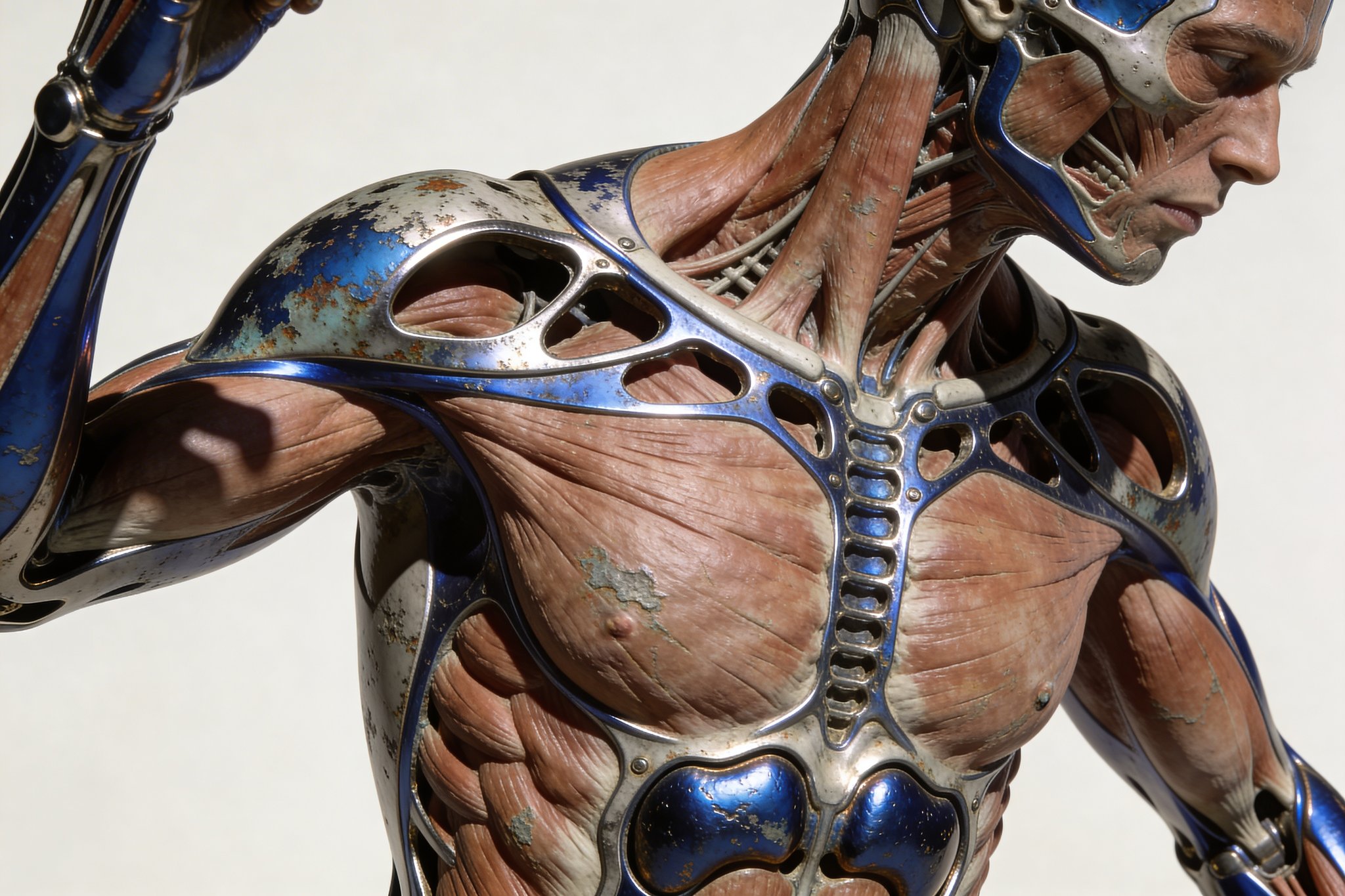
Create a versioned, anatomically auditable full-body human ecorché—musculoskeletal ground truth under Arvolve’s algorithmic surface—delivered as a production basemesh, print-ready artifact, and AR/VR-ready reference system.
Problem framing
Most anatomy references split into two failure modes: clinical resources that are accurate but not built for production workflows, and production basemeshes that are usable but anatomically compromised. The gap is not “more detail.” The gap is a canonical human that can be trusted as a reference artifact and also drops into a rigging/animation/printing pipeline without translation.
Arvolve Ecorché Canon treats “the default human” as infrastructure: stable, versioned, and audit-ready. The goal is a model that supports study, deformation, fabrication, and real-time display while staying unmistakably Arvolve—algorithmic surface logic without sacrificing musculoskeletal truth.
Core proposition: a canonical human, not a one-off sculpt
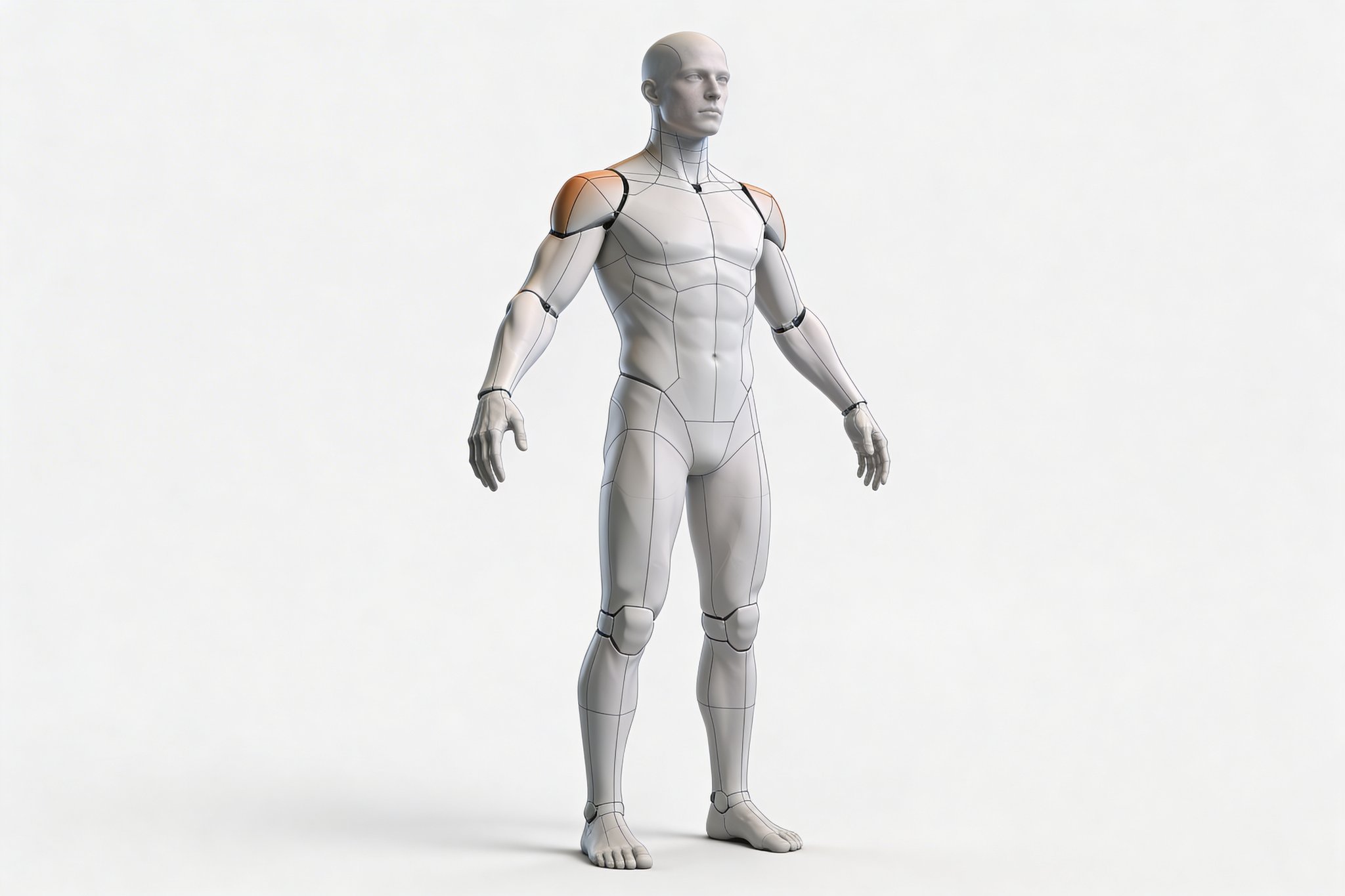
This project defines a single neutral canon first: one body with explicit proportions, named landmarks, and a repeatable validation protocol. Variants (sex, age, body fat %, athletic/muscular) come later as controlled deltas from the canon, not independent sculpts that drift.
The canon is built as two simultaneously valid readings:
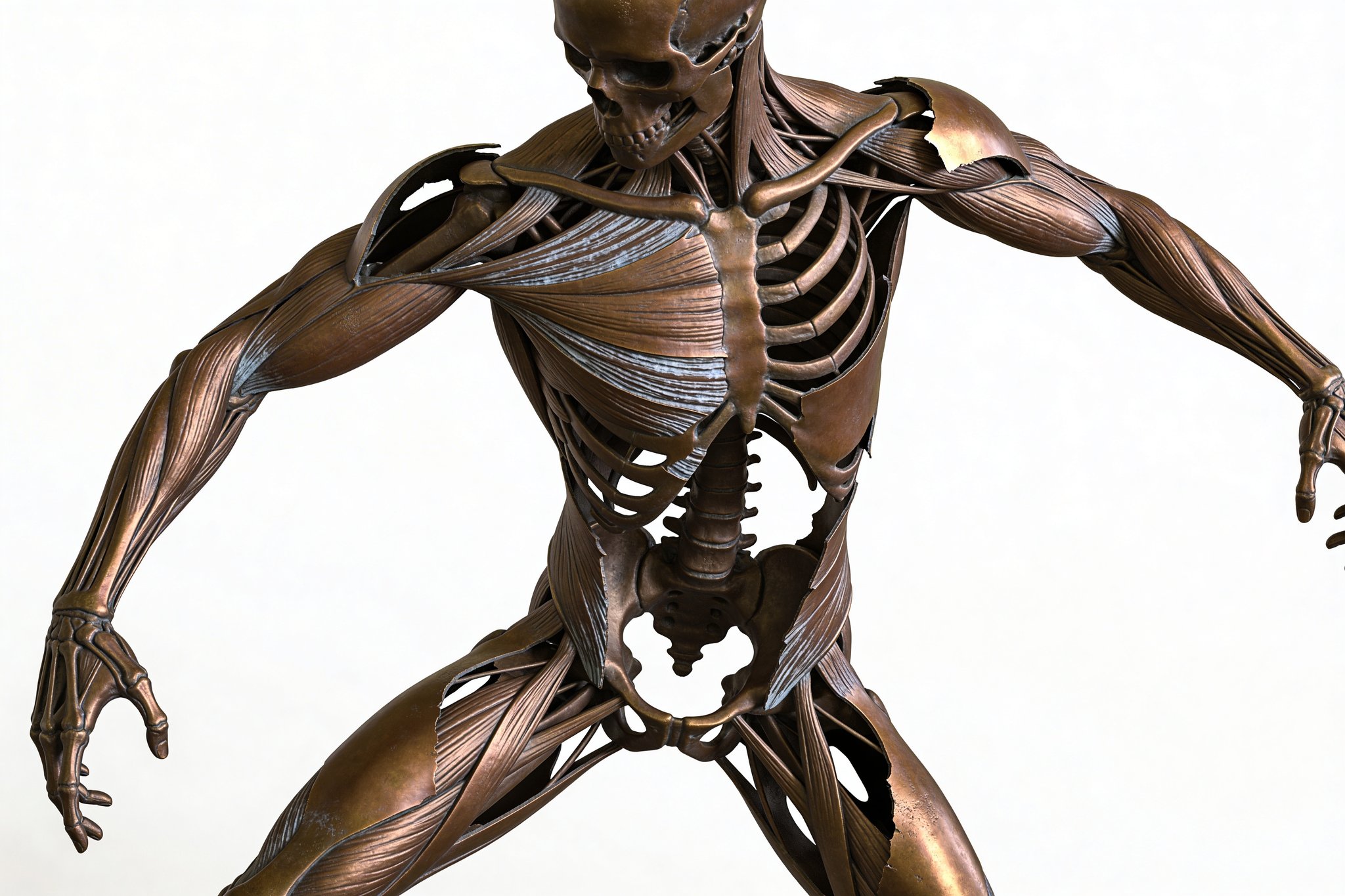
- Ecorché truth: bones, major muscle groups, tendons, and bony landmarks as the primary ground truth.
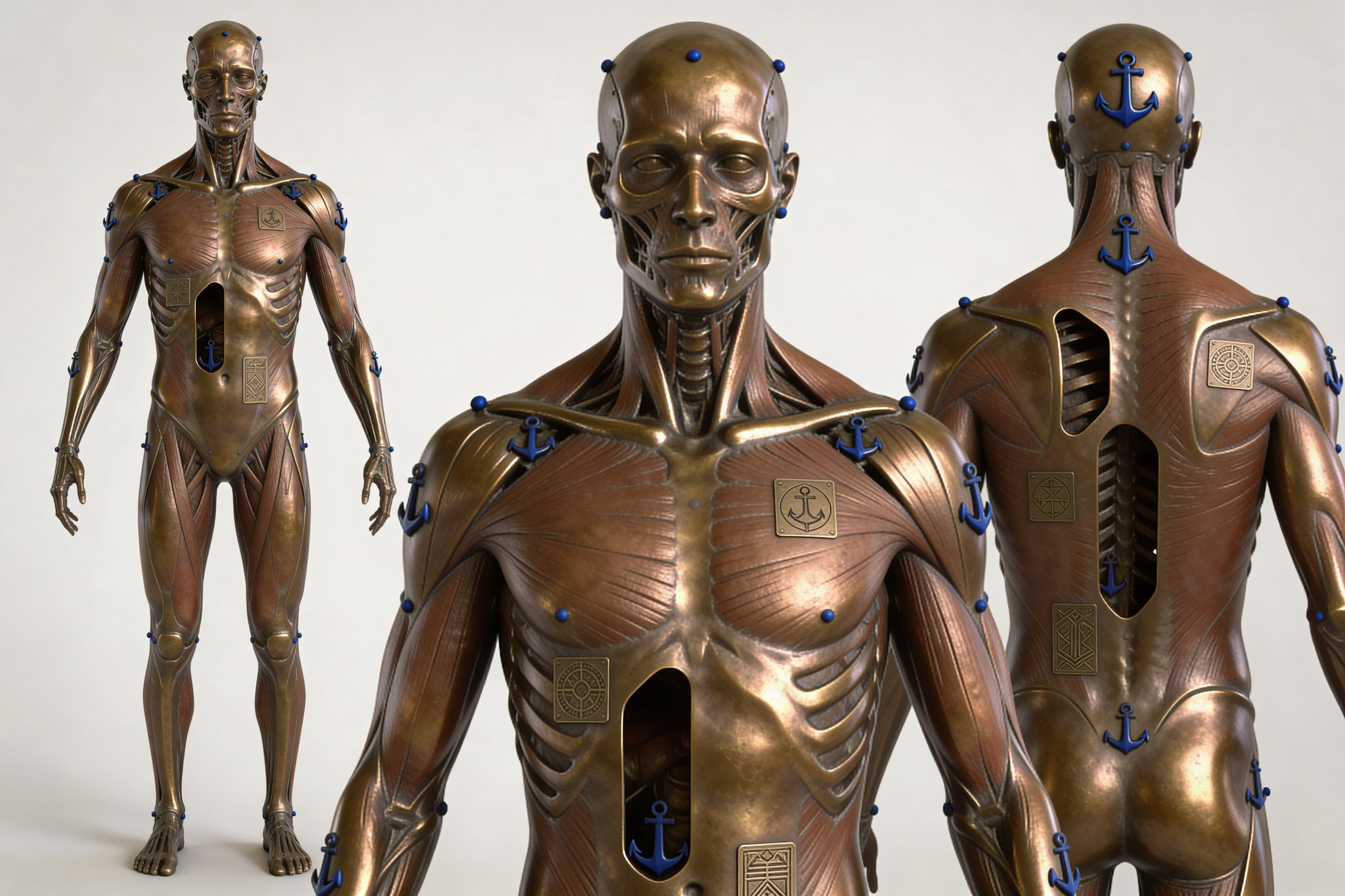
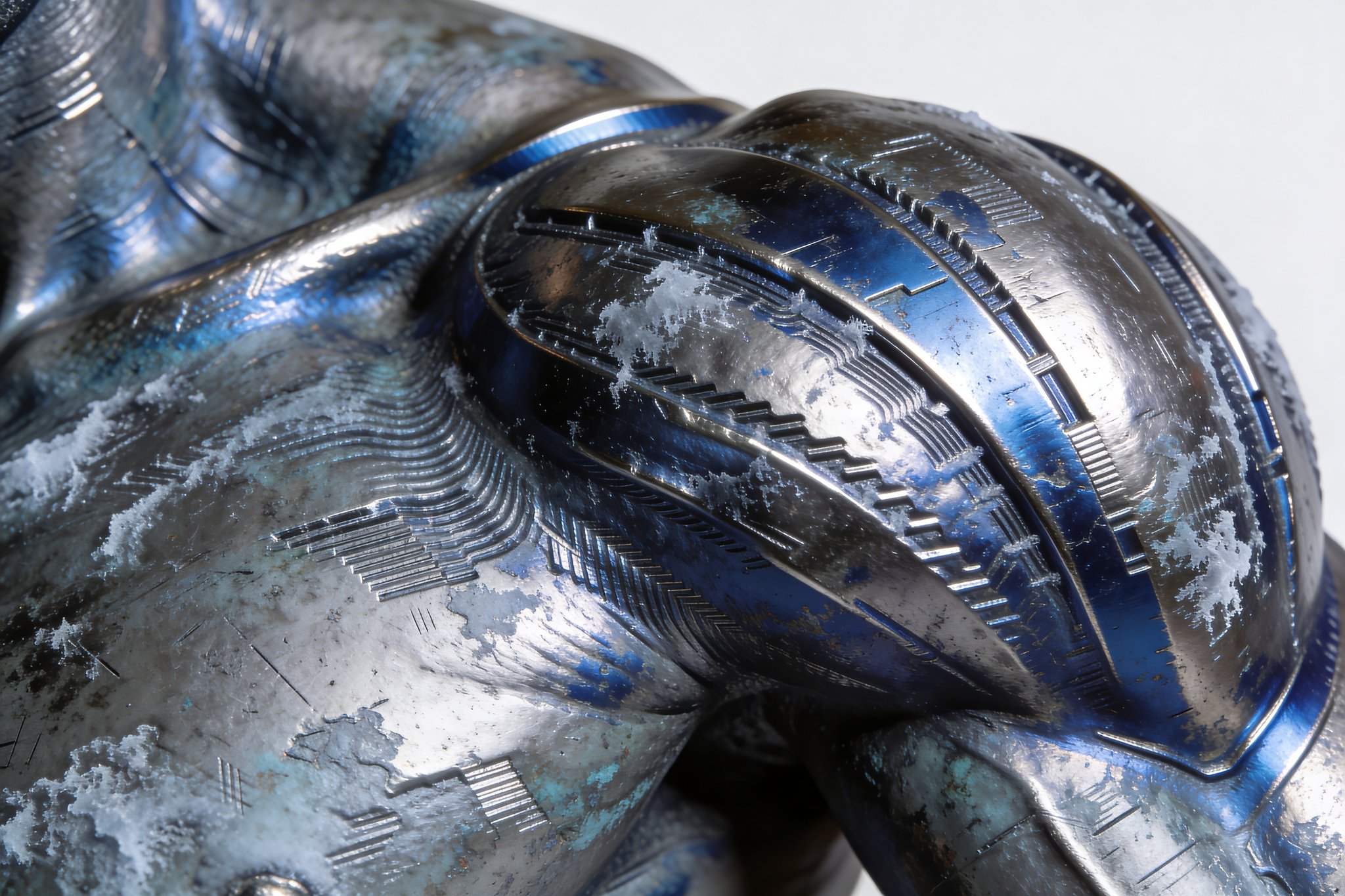
- Algorithmic skin: an Arvolve surface that expresses motion, toolmarks, and computed fracture—while being constrained to keep landmarks readable for learning and rigging.
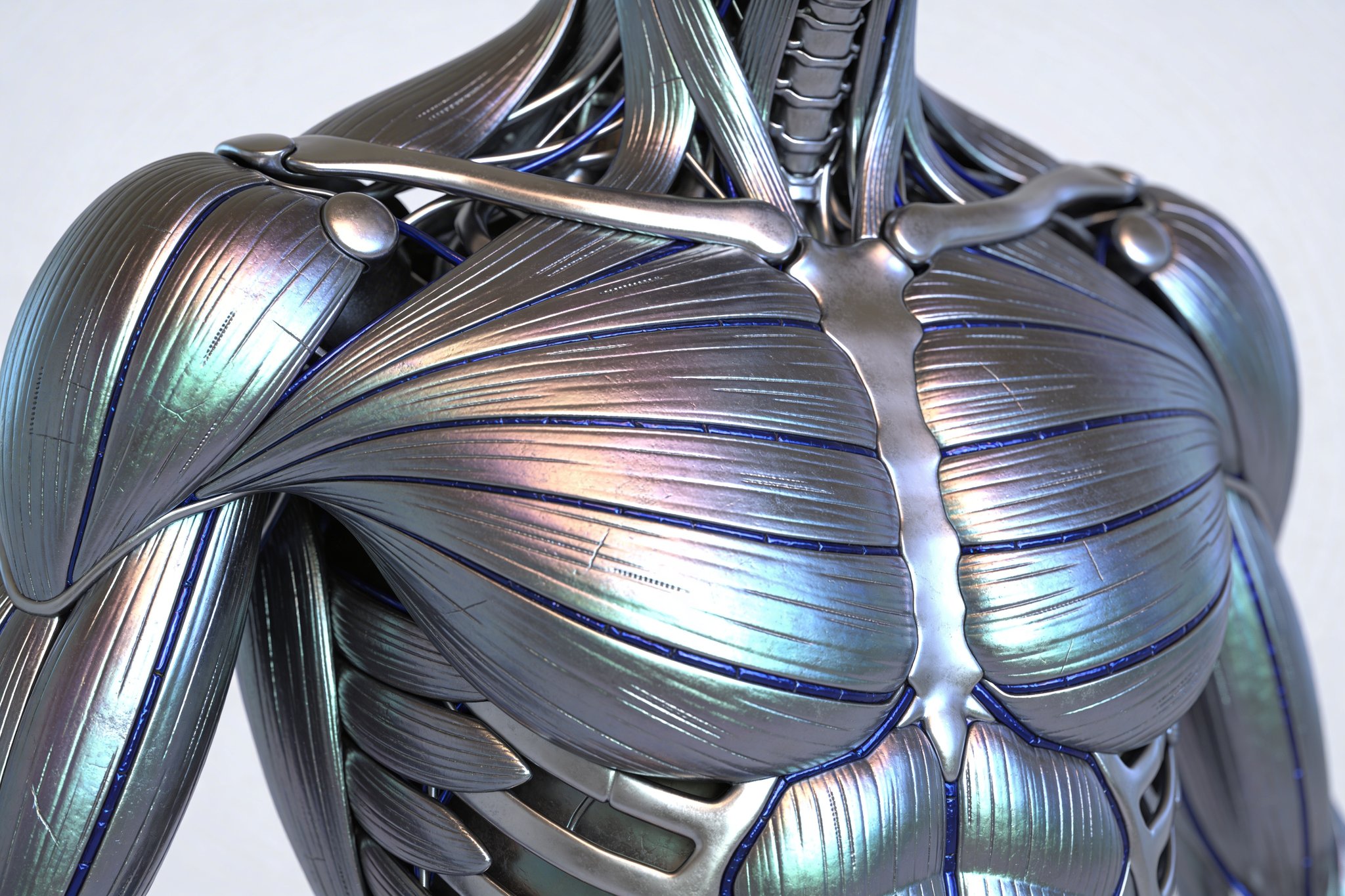
Design language: readability under controlled chaos
Arvolve’s surface language is an advantage only if it clarifies structure rather than decorating it. The operating rule is “landmarks win.”
Non-negotiable readable features:
- Clavicle line, acromion, scapular spine and inferior angle.
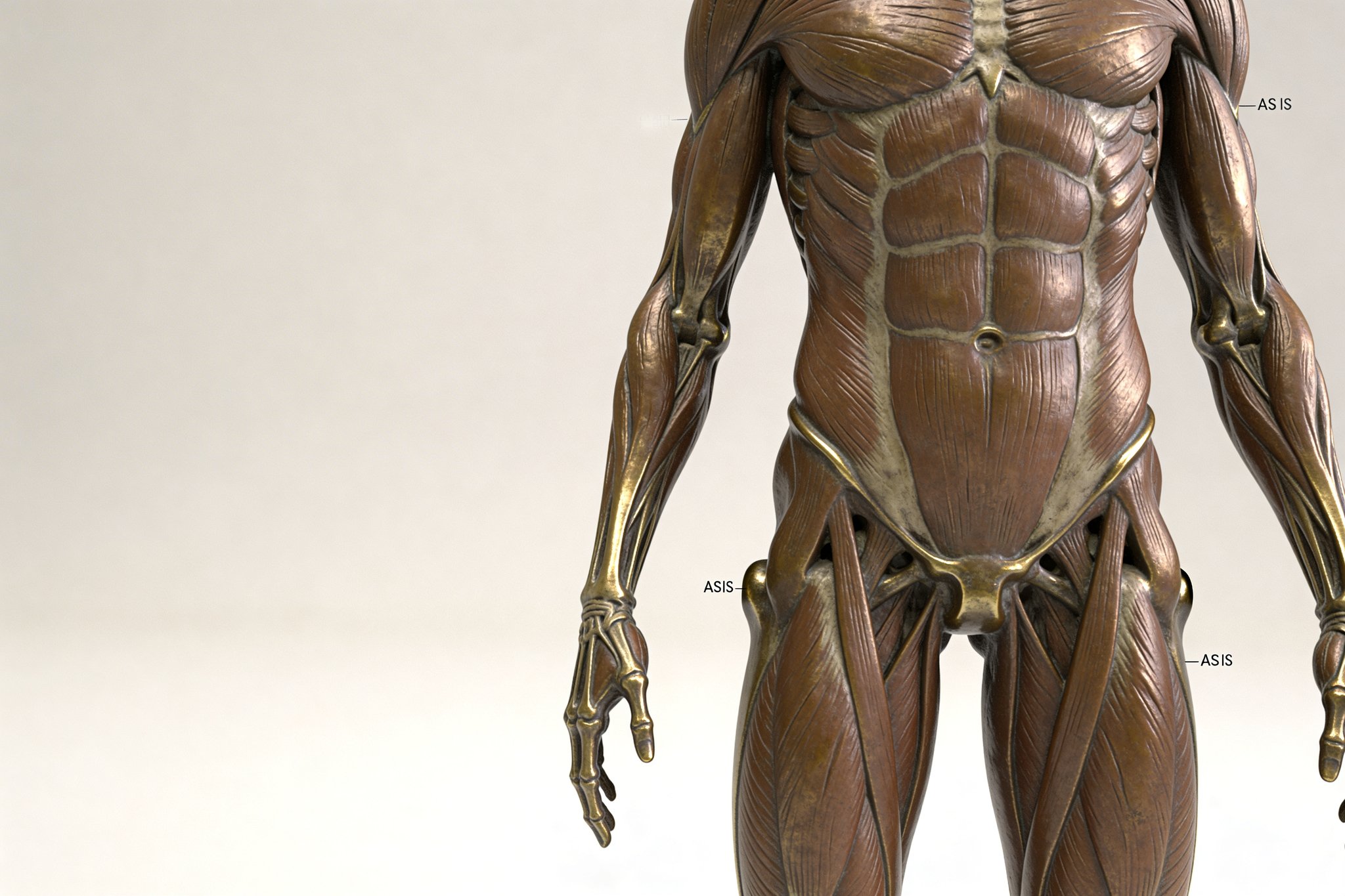
- Iliac crest, ASIS/PSIS, greater trochanter, patella, tibial tuberosity, malleoli.
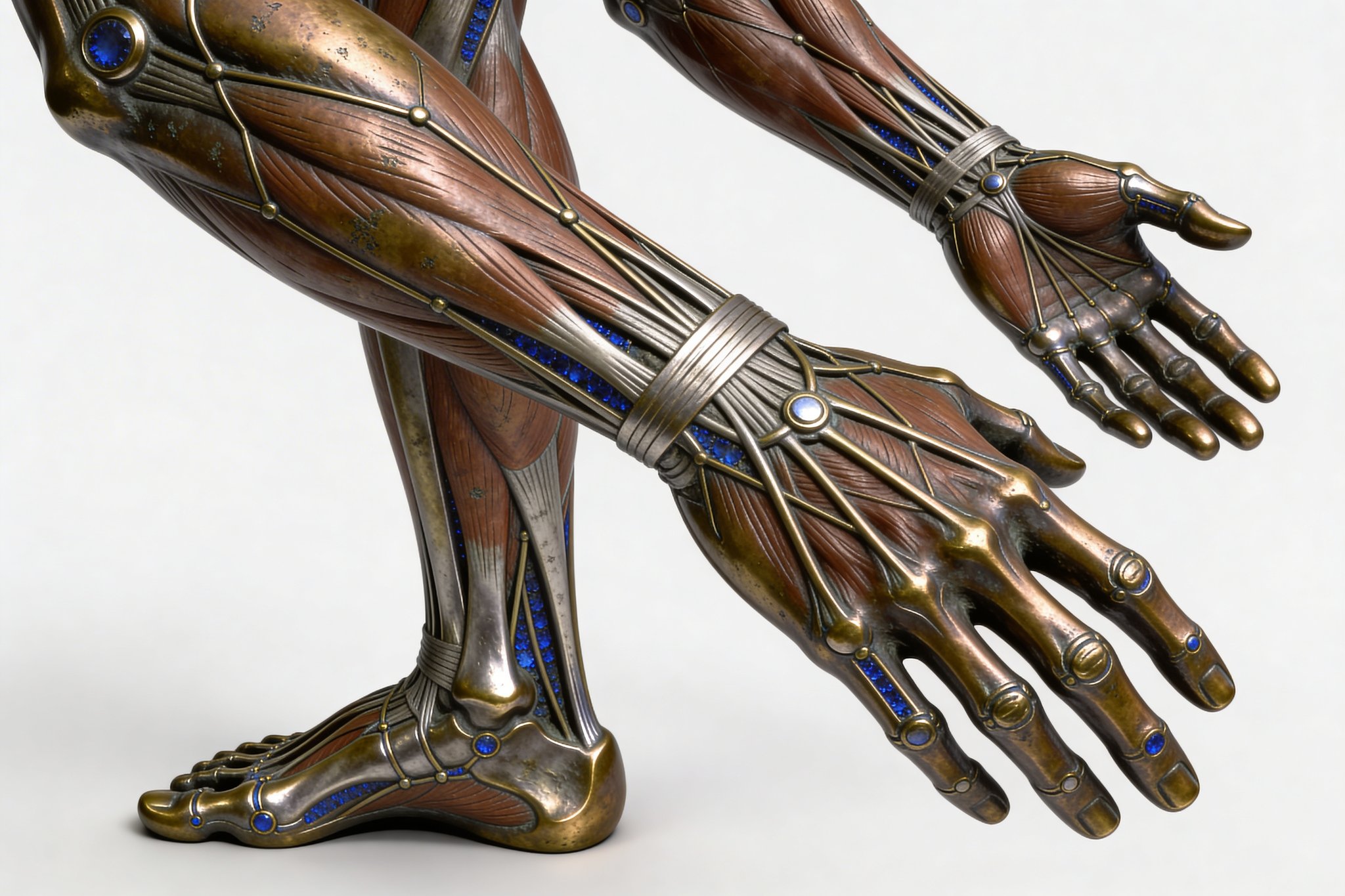
- Epicondyles at elbow and knee, Achilles tendon line, wrist styloids.
- Primary muscle group silhouettes (deltoid heads, pec insertion, serratus plane, rectus/obliques flow, gluteal mass, quad compartments, gastrocnemius heads).
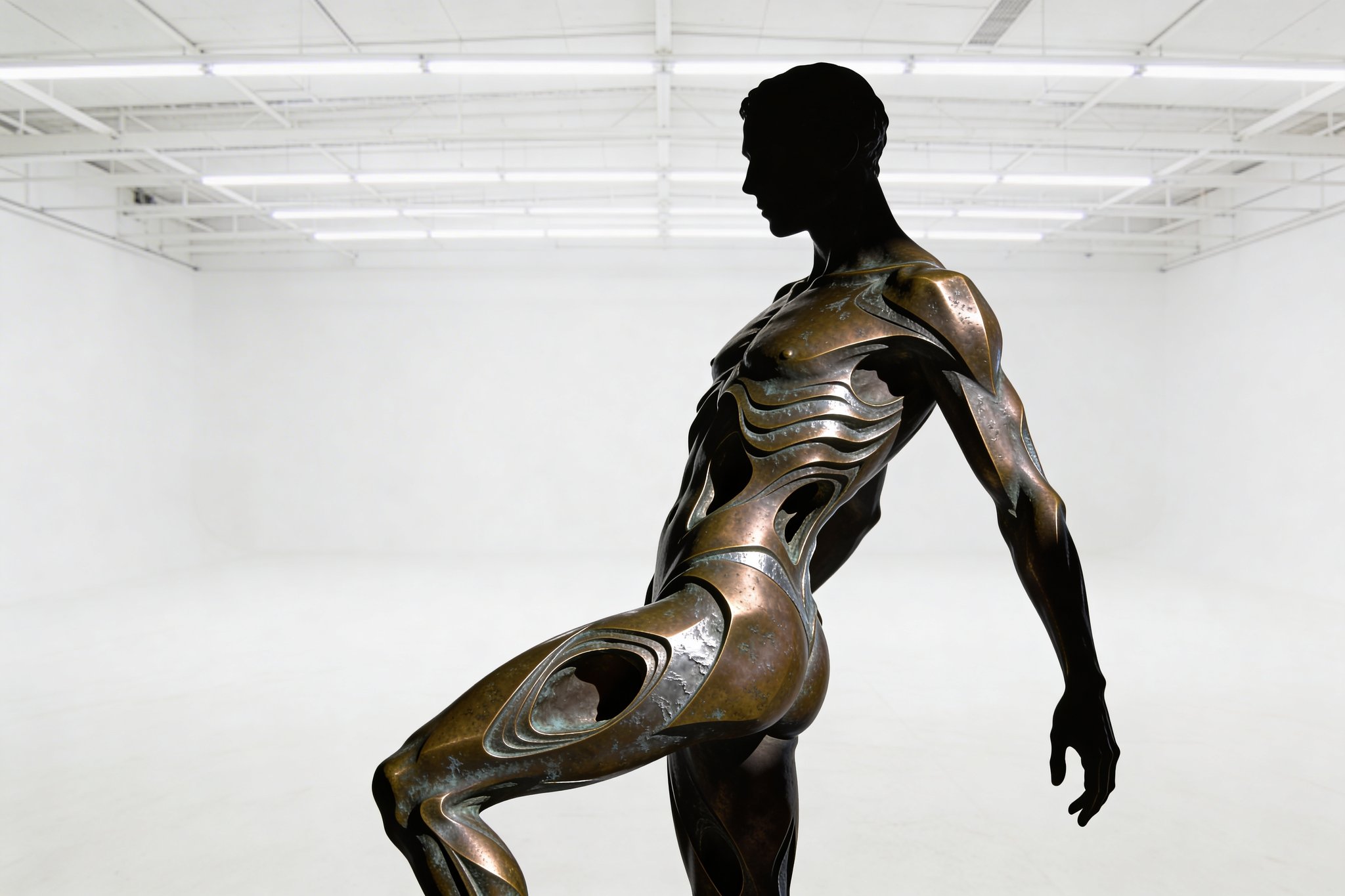
Algorithmic abstraction is allowed in interstitial zones and surface planes that do not carry rigging or teaching load. Negative space is used deliberately: voids and cutaways reveal layered anatomy without turning the figure into a fragmented gimmick.
Asset stack (deliverables engineered for use)
Plasticity here is not in the form—it’s in the packaging. The same canon must serve multiple contexts.
Layer 1: High-res anatomical sculpt
- Skeleton: anatomically plausible proportions and joint landmarks (not an orthopedics simulation, but defensible shapes).
- Superficial musculature: major muscle groups with clean separations and tendon readability.
- Optional deeper forms (later): selected deep muscles where they improve comprehension (e.g., rotator cuff hints) without visual overload.
Layer 2: Deformation-ready basemesh
- Clean edge flow at shoulders, elbows, wrists, hips, knees, ankles, neck, and face/mandible transitions.
- Topology supports standard humanoid rigs and corrective systems.
- UV layout optimized for education overlays and production texturing.
Layer 3: Print-ready artifact mesh
- Watertight geometry, manifold checks, consistent normals.
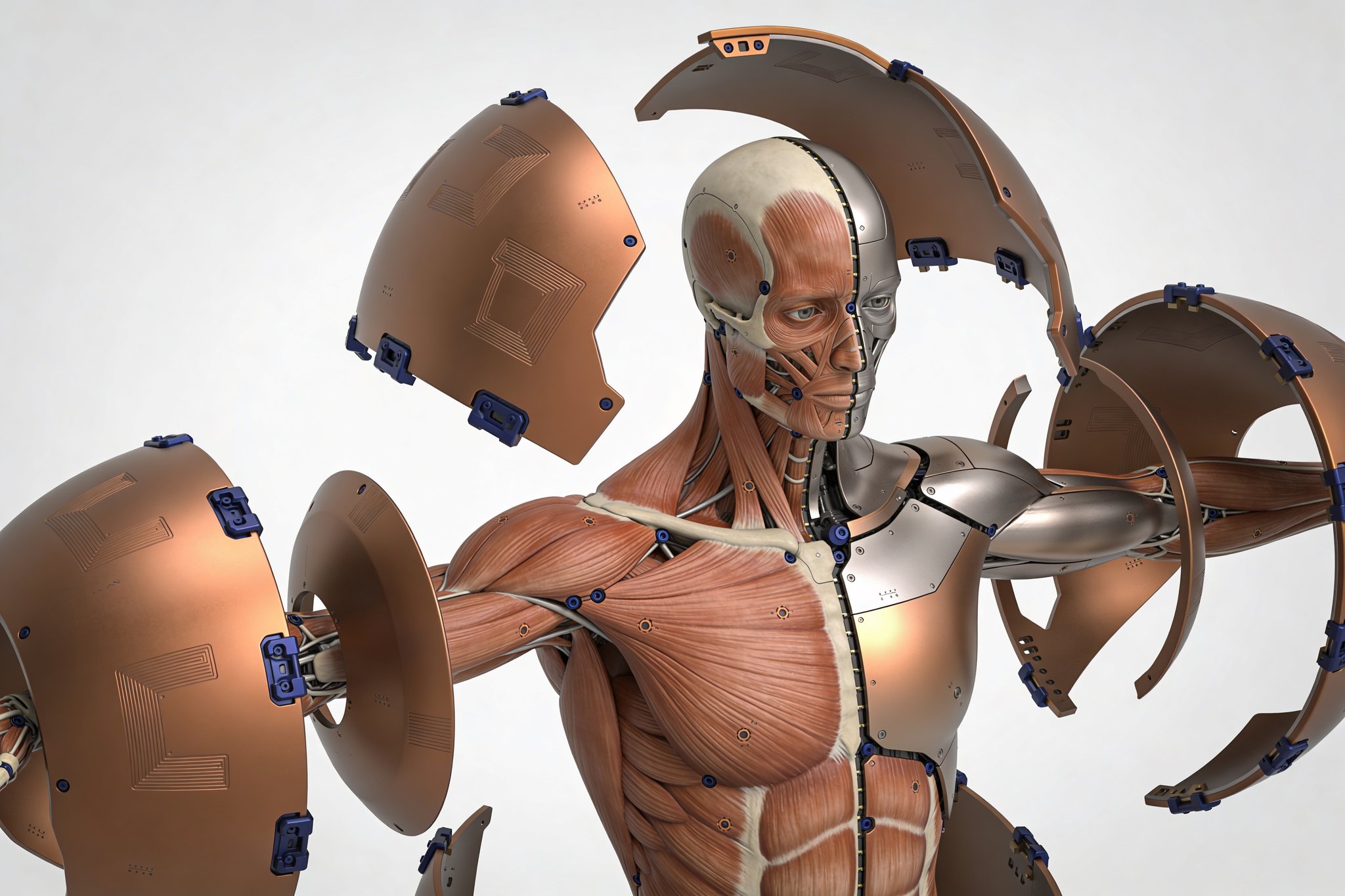
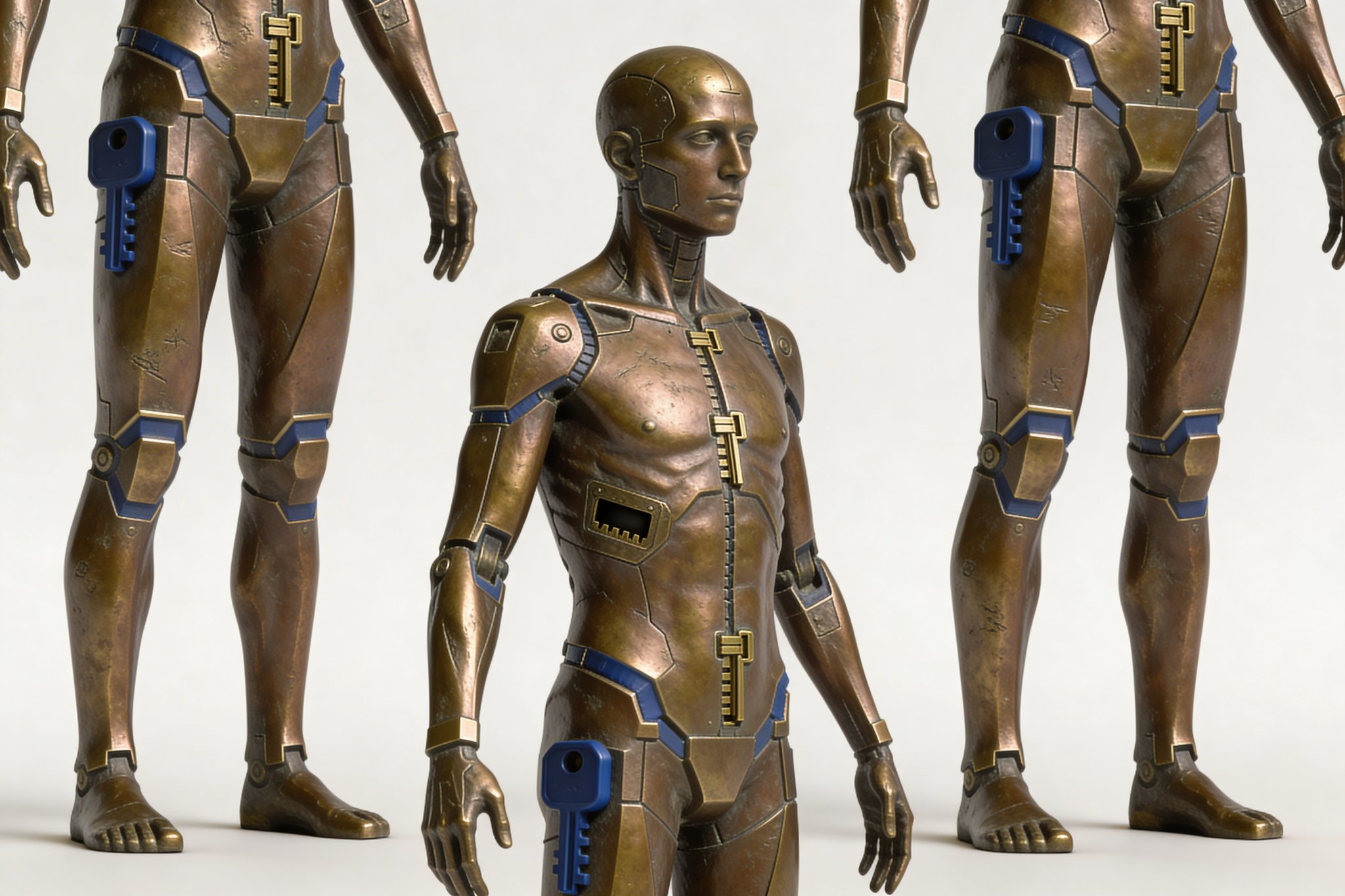
- Segmentation plan designed for real assembly (keys, magnet seats, tolerance strategy).
- Surface detail scaled to survive physical fabrication without turning into noise.
Layer 4: AR/VR-ready real-time package
- LODs with consistent silhouette and landmark preservation.
- Annotation anchors: named points/regions for muscle/bone labels, isolation toggles, and slicing planes.
- Material strategy: high-frequency detail readable under studio-neutral lighting without reliance on post effects.
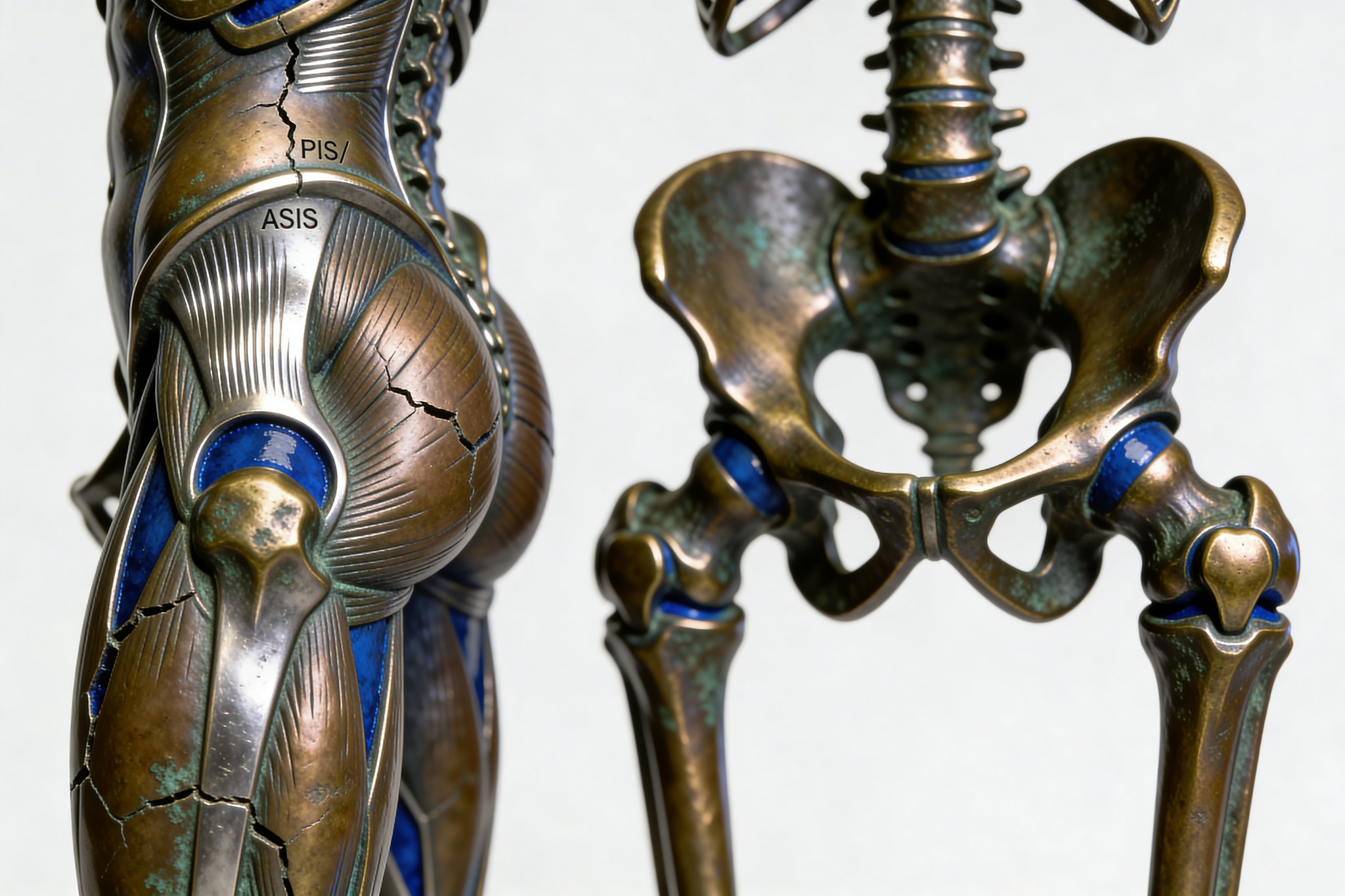
Validation: anatomical audit as a product feature
The canon is “trusted” only if changes are controlled and reviewable.
Validation protocol (MVP):
- Landmark checklist with pass/fail reference images.
- Origin/insertion map for superficial muscles included in the model.
- Proportion system definition (height, limb ratios, shoulder/hip widths) with documented targets.
- Regression renders: standardized front/side/back/three-quarter views plus landmark close-ups, consistent lighting and camera.
Any version change ships with a delta note: what changed, why, and which checks were revalidated.
Roadmap (staged to avoid drift)
- MVP Canon (neutral): full-body ecorché + constrained algorithmic skin + basemesh + print mesh.
- Variant pack: male/female/androgynous deltas from canon; body fat % and muscularity as parametric edits.
- Education layer: structured annotations, muscle isolation, and guided cutaway states for AR/VR.
- Pipeline layer: standardized rig, deformation tests, and export presets for common DCCs and engines.
Use cases (where it earns its keep)
- Anatomy reference: a modern ecorché that is visually memorable but anatomically strict.
- Animation basemesh: a reliable starting point with landmark-safe topology.
- 3D printing: a gallery-grade artifact that also teaches through physical assembly.
- AR/VR: an explorable musculoskeletal system with meaningful isolation and slicing, not a static model in a headset.
Generation Prompts
Image Prompt
Photoreal studio render of a full-body human ecorché standing in a dynamic 3/4 pose, complete musculoskeletal system visible beneath an Arvolve algorithmic skin: fractured planes, frozen-turbulence grooves, micro toolmarks, mineral-to-metal patina with deep blue accents. Matte neutral infinity background, full figure with ample negative space cutaways exposing clavicle, scapula, iliac crest, patella landmarks; crisp HDR lighting, no DOF.
3D Model Prompt
Full-body neutral ecorché with accurate skeleton + superficial musculature, plus a secondary constrained “algorithmic skin” shell that preserves landmarks. Watertight print mesh variant with keyed segmentation seams and magnet pockets; deformation basemesh variant with clean edge flow at major joints. Materials: frosted acrylic look for skin shell, brushed aluminum connectors; engraved landmark labels as separate mesh decals.
Constraints & Non-Goals
- —No stylization: proportions, landmarks, and muscle volumes must be defensible against standard ecorché references and remain readable at macro and tendon-insertion scales.
- —Dual-layer fidelity: musculoskeletal structures remain anatomically correct while the algorithmic surface never obscures primary landmarks needed for study and rigging.
- —Production + manufacturing readiness: clean deformation topology and watertight printable geometry with segmentation and tolerances designed for real materials.
- —Canonical stability: the asset is versioned and regression-tested; changes require documented deltas and an anatomy QA checklist sign-off.
Feasibility Gradient
A canonical ecorché asset is feasible with current sculpting, retopology, and real-time pipelines; the dominant cost is anatomical verification, topology/UV authoring, and packaging across formats (animation basemesh, print segmentation, AR/VR LODs). The key risk is balancing Arvolve’s controlled algorithmic surface with uncompromised landmark readability; this is mitigated by hard readability constraints, an anatomy QA checklist, and staged release (single neutral canon first, then variants).
Next Actions
- Define the canonical spec: height/proportion system, landmark list, muscle groups included, and the minimum deliverable set for MVP (neutral body).
- Build the anatomy QA protocol: origin/insertion map, landmark checklist, reference board, and a regression render set for each version.
- Sculpt MVP high-res (bones + superficial muscles + tendons) and generate two surfaces: literal ecorché and Arvolve algorithmic skin constrained to preserve landmarks.
- Ship the first package: deformation-ready basemesh + watertight print mesh with segmentation plan + AR/VR LODs and annotation anchors.
Interactive 3D Model
Restricted Layer
Restricted materials include high-res source sculpts (ZTL), full anatomical QA sheets (landmark checklist, origin/insertion maps, proportion charts), ArX surface-generation recipes and constraint masks, deformation topology templates (edge-flow standards and corrective anchors), print segmentation library (keys, magnet seats, tolerances), LOD bake presets and shader stack, AR/VR interaction and annotation graph specs (isolation, slicing, labeling), and licensing/distribution playbooks.
Request accessLast updated: February 24, 2026