Distant Atlas
Arvolve needs a design atlas that separates immediate build paths from long-horizon exploration across body systems, intelligent objects, virtual worlds, and regenerative or exploratory infrastructure.
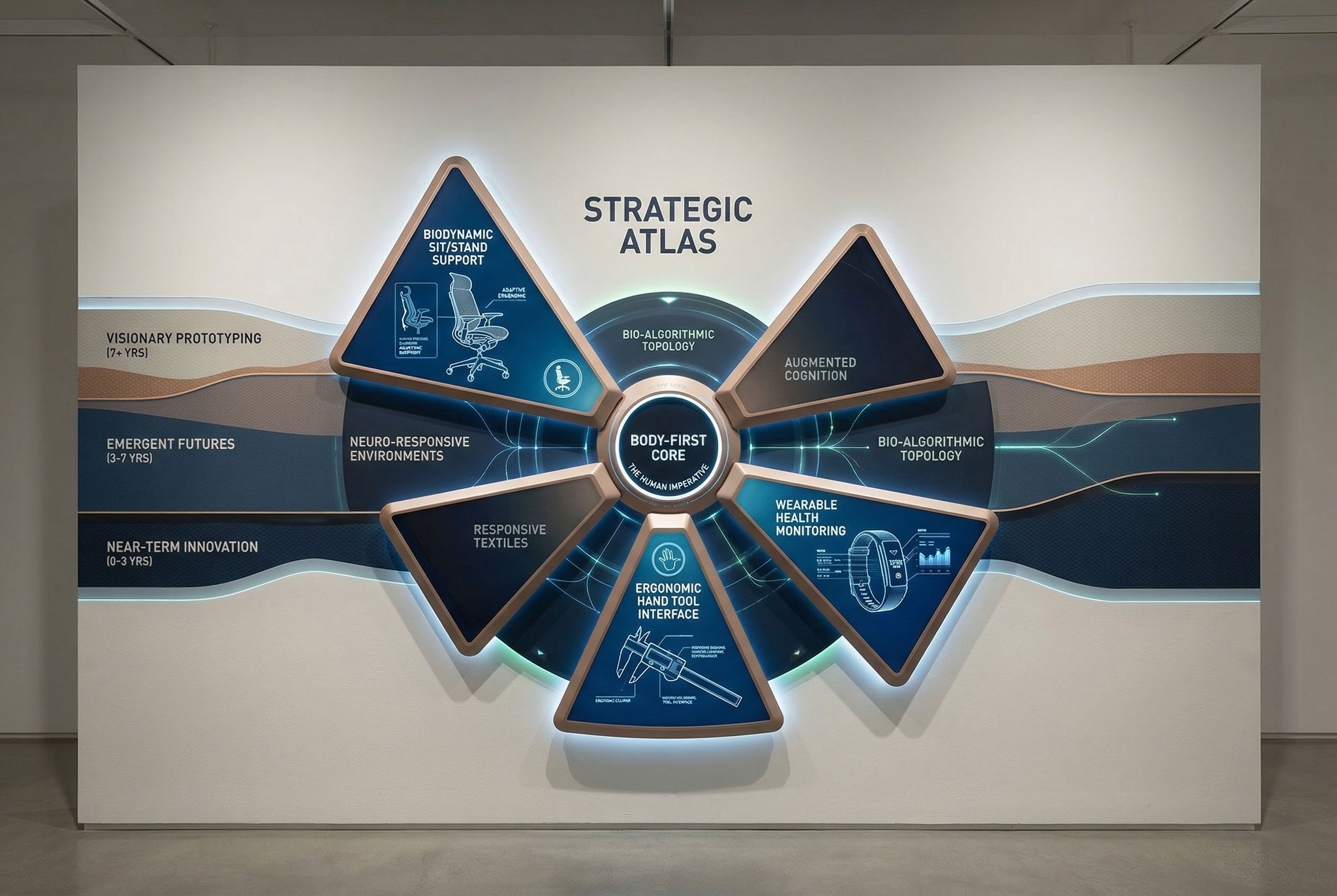
A wide design appetite becomes incoherent unless it is structured.
Premise
- Arvolve spans products, environments, systems, characters, and commerce.
- Without a portfolio logic, the same breadth that signals capability also creates diffusion.
- The first task is not invention. It is classification.
Mechanism
- Design Atlas
- Build a structured map of what Arvolve should explore across current, emerging, and visionary horizons.
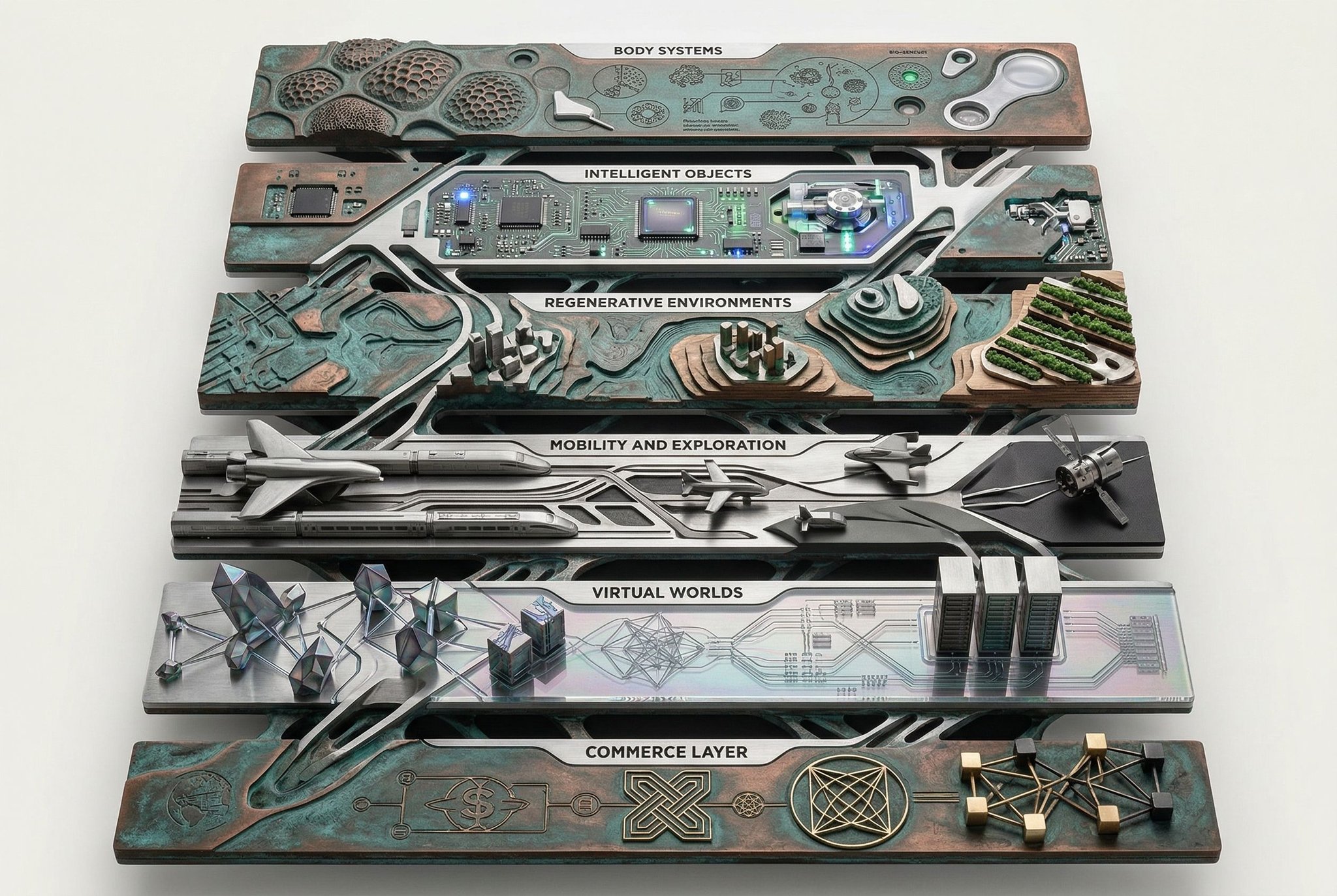
- Portfolio Pillars
- Body Systems
- biodynamic furniture, seating, lighting, tools, footwear, wearables, personal products
- Intelligent Objects
- healthcare devices, biometrics, drones, robotics, educational technology
- Regenerative Environments
- sustainable products, vertical farms, emergency shelters, public-space systems
- Mobility and Exploration
- EVs, autonomous systems, prosthetics, space equipment
- Virtual Worlds
- gaming environments, metaverse spaces, interactive characters, animation systems
- Commerce Layer
- collaborations, e-commerce, digital/physical productization
- Body Systems
- Unifying Logic
- Human-centered biomechanics
- Sustainability and social responsibility
- Meaningful technology integration
- Cross-domain visual and systemic coherence
- Long-term adaptability
Why This Structure
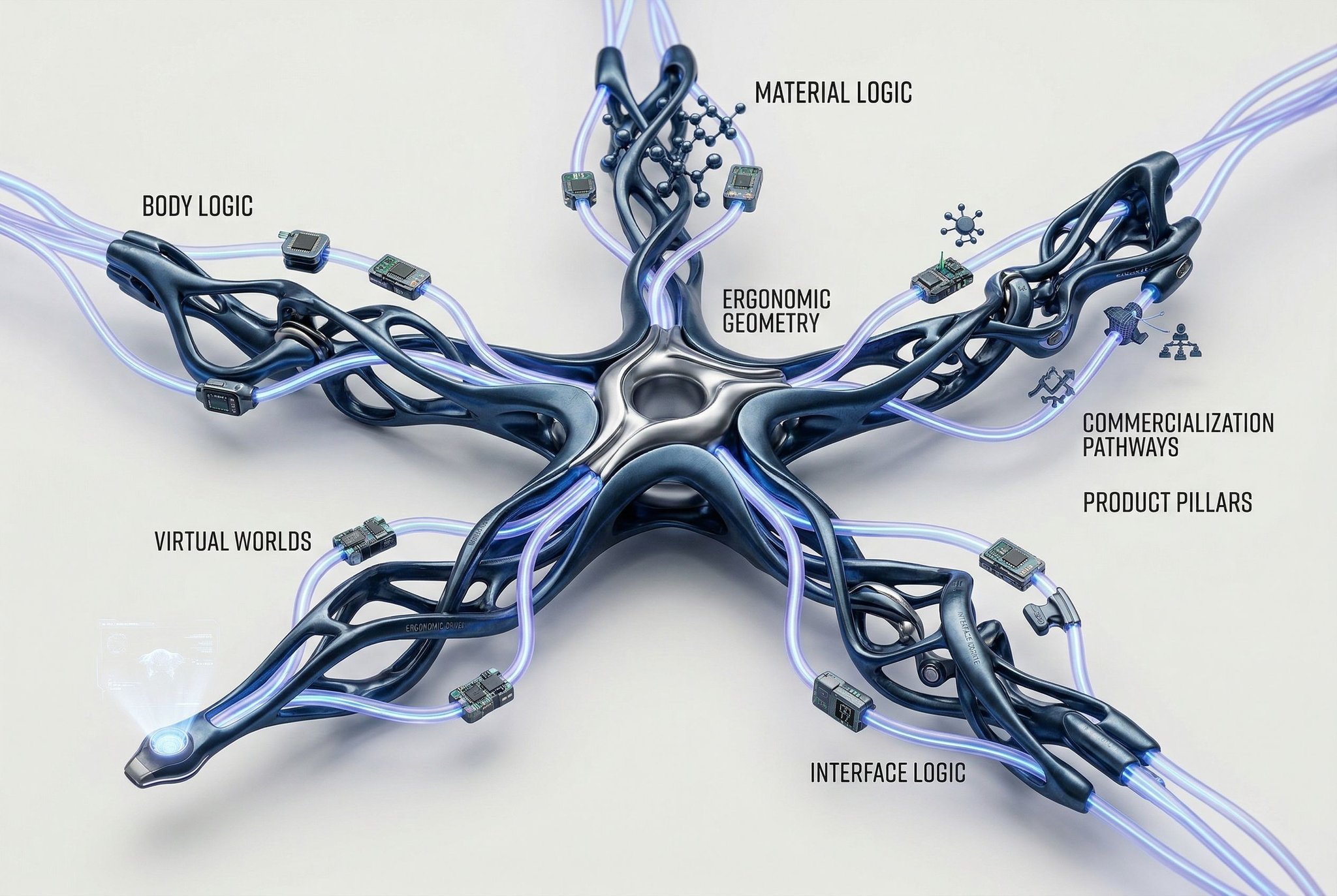
- A body-first logic can unify otherwise diverse categories.
- A digital layer can connect physical products, virtual assets, and commerce.
- Near-term products can fund capability while visionary branches build long-range identity.
- Arvolve’s advantage is concept-to-asset continuity: the same design intelligence can move from speculative vision to presentable form faster than category-specialized studios.
- Early pillars should clarify whether they monetize through DTC products, B2B design partnerships, or hybrid digital-physical launches.
Prioritization Logic
- Strategic fit with Arvolve strengths
- Prototype feasibility
- Market viability
- Cross-category reuse of systems and language
- Long-term defensibility
- Capability compounding from one pillar into the next
- Near-term categories should be scored partly by whether they build reusable geometry, interface logic, or brand language for later pillars.
- A category should only move upward in priority when it inherits reusable language, tools, or commercial proof from a lower-risk pillar.
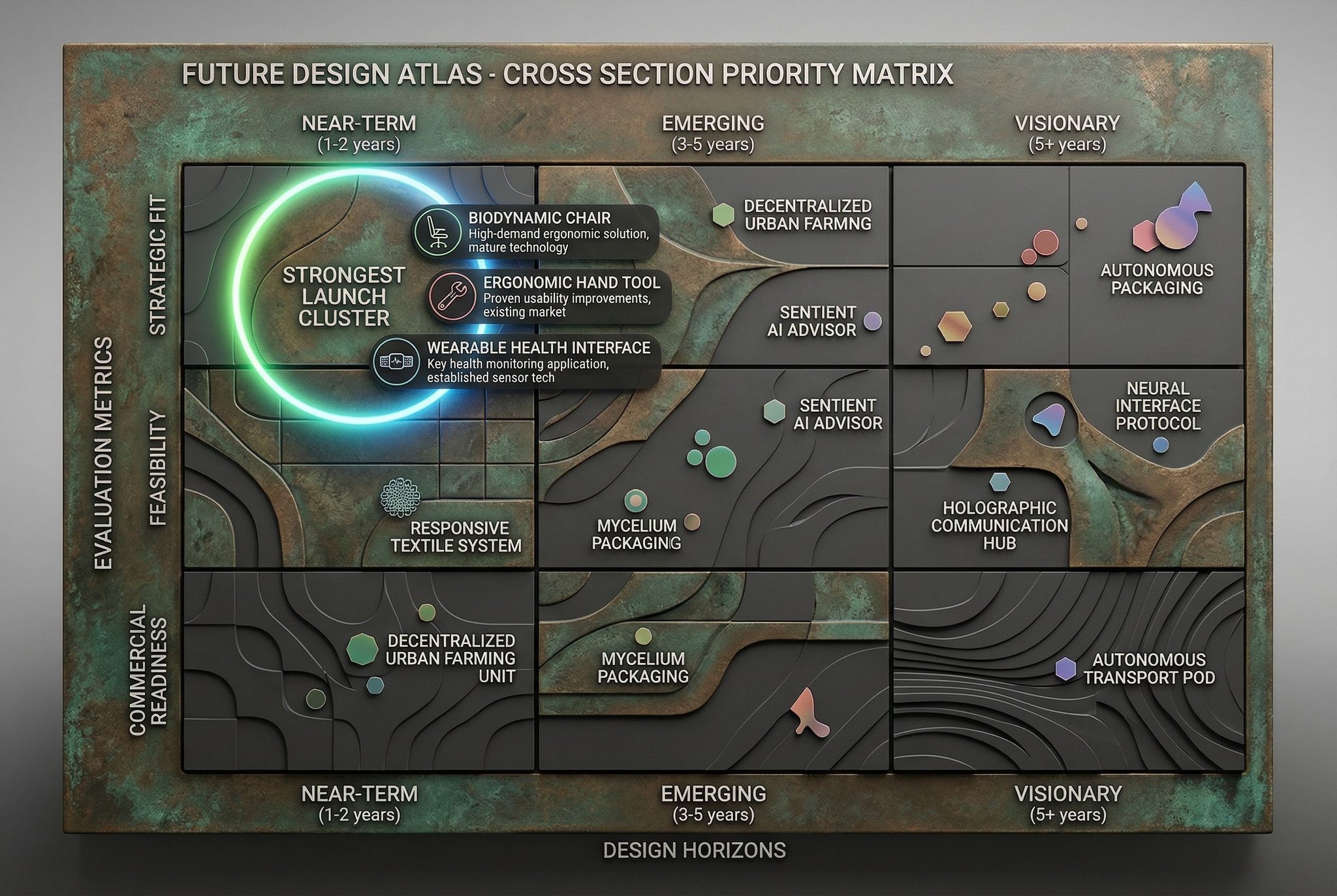
First Focus
- Body Systems is the strongest starting cluster.
- Initial candidates should be explicit:
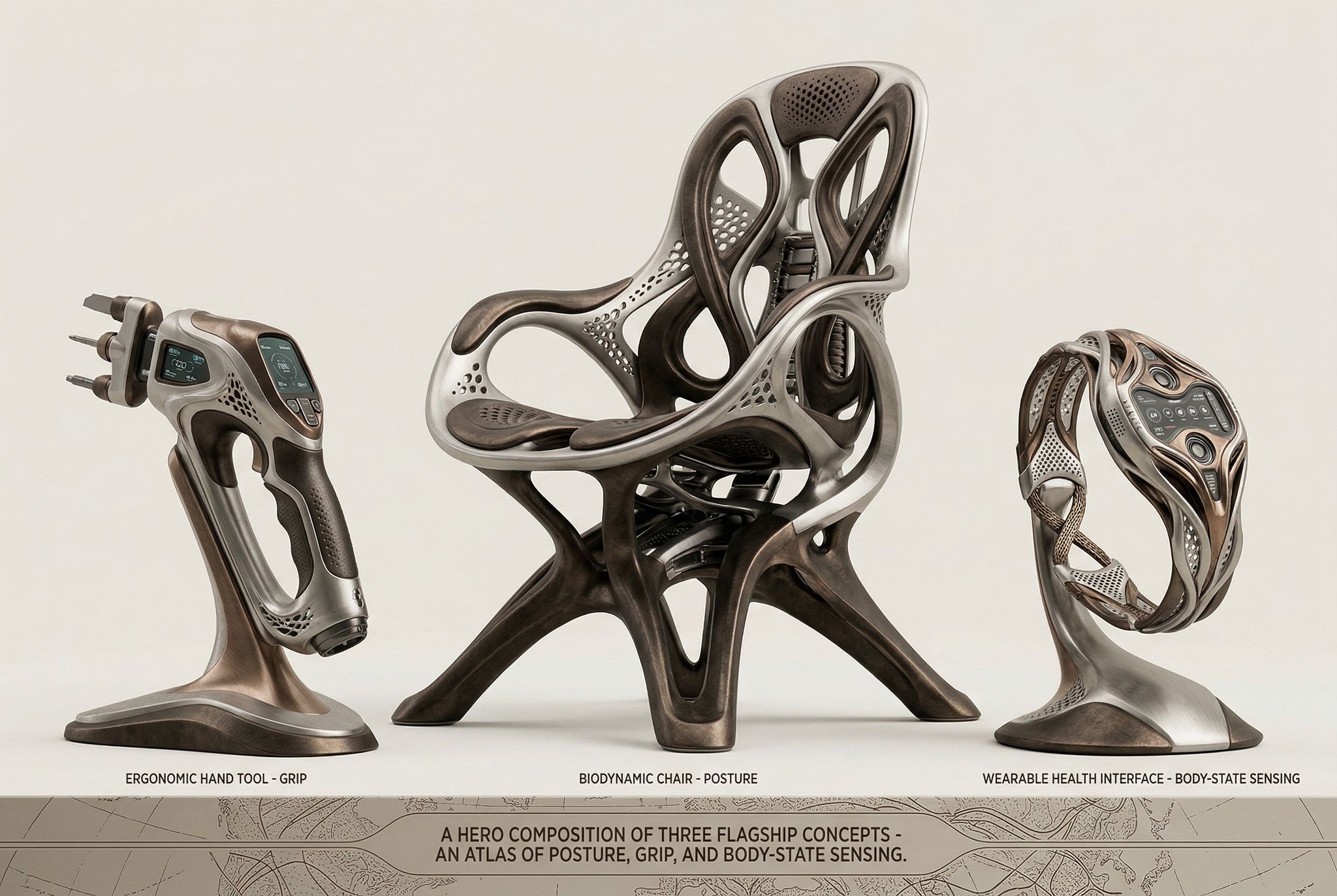
- biodynamic chair
- ergonomic hand tool
- wearable health interface
- Together these three candidates test the same thesis at three scales: posture, grip, and body-state sensing.
- They should resolve into three proof modes: a physical prototype, a digitally demonstrable system, and a market-facing test.
Trade-offs
- A broad atlas increases strategic clarity, but can still tempt overreach.
- Too much focus on near-term products risks losing visionary identity.
- Too much attention on visionary infrastructure risks becoming unserious.
- The atlas must also exclude low-fit categories; a map that cannot say no is not a strategy.
- For example, space habitats may remain mapped but explicitly deprioritized until smaller-scale body and environment systems are proven.
Strategic Edge
- This is not a portfolio list.
- It is the operating map that turns Arvolve from a talented generalist into a coherent design intelligence company.
- If the atlas works, every future project becomes easier to position, evaluate, prototype, and commercialize.
Generation Prompts
Image Prompt A premium strategic portfolio map displayed as a dark elegant design atlas wall, six major pillars arranged by horizon from near-term body products to visionary infrastructure, with the biodynamic chair, ergonomic hand tool, and wearable health interface visibly highlighted as first bets, explicit priority tiers, near-term versus visionary layers, reusable system links, and body-first icons, deep blue and bronze accents, cinematic studio lighting, ultra-detailed minimalist future-industrial interface.
Video Prompt Slow cinematic move across a living design atlas as body products, virtual worlds, mobility systems, and infrastructure branches illuminate by priority tier, near-term and visionary layers separating visually, connection lines pulsing between reusable systems, dark premium studio atmosphere, crisp volumetric light, restrained futuristic motion graphics.
Constraints & Non-Goals
- -This is a prioritization framework, not a promise to build every category at once.
- -Each category must earn its place through strategic fit with Arvolve’s capabilities, not through trend-chasing.
- -Time horizon must be explicit so near-term products are not confused with long-horizon infrastructure programs.
- -AI, VR, AR, and IoT should appear only where they materially improve function, cognition, sustainability, or experience.
Feasibility Gradient
The list is too broad to operate as one flat project slate, but highly valuable as a portfolio operating system. The feasible move is not maximal expansion; it is classification. By structuring the landscape into a small number of flagship pillars and ranking them by strategic fit, prototype difficulty, and commercial readiness, Arvolve can turn breadth into sequence. Body systems are the strongest near-term cluster because they align with human-factors logic, can be prototyped at smaller scale, and generate both physical and digital design assets. Long-horizon infrastructure categories remain valid, but should be framed as visionary branches rather than immediate build targets.
Next Actions
- Define the flagship pillars and assign every listed category to one primary home.
- Rank each pillar by horizon, strategic fit, technical difficulty, and commercial potential.
- Advance three near-term candidates first: biodynamic chair, ergonomic hand tool, and wearable health interface.
- Build the cross-category design language linking body logic, material logic, technology logic, and commercialization path.
Restricted Layer
The restricted layer would include the full category matrix, prioritization model, capability roadmap, IP map, collaboration framework, exclusion criteria, monetization pathways, migration rules between horizons, and Atlas versioning logic for expanding the portfolio without losing coherence.
Request accessLast updated: March 20, 2026