Neural Network Plasticity
Living Models proposes an inspectable adaptation stack where memory, policy, skill, and weights evolve at separate speeds under consent, evaluation, and rollback.
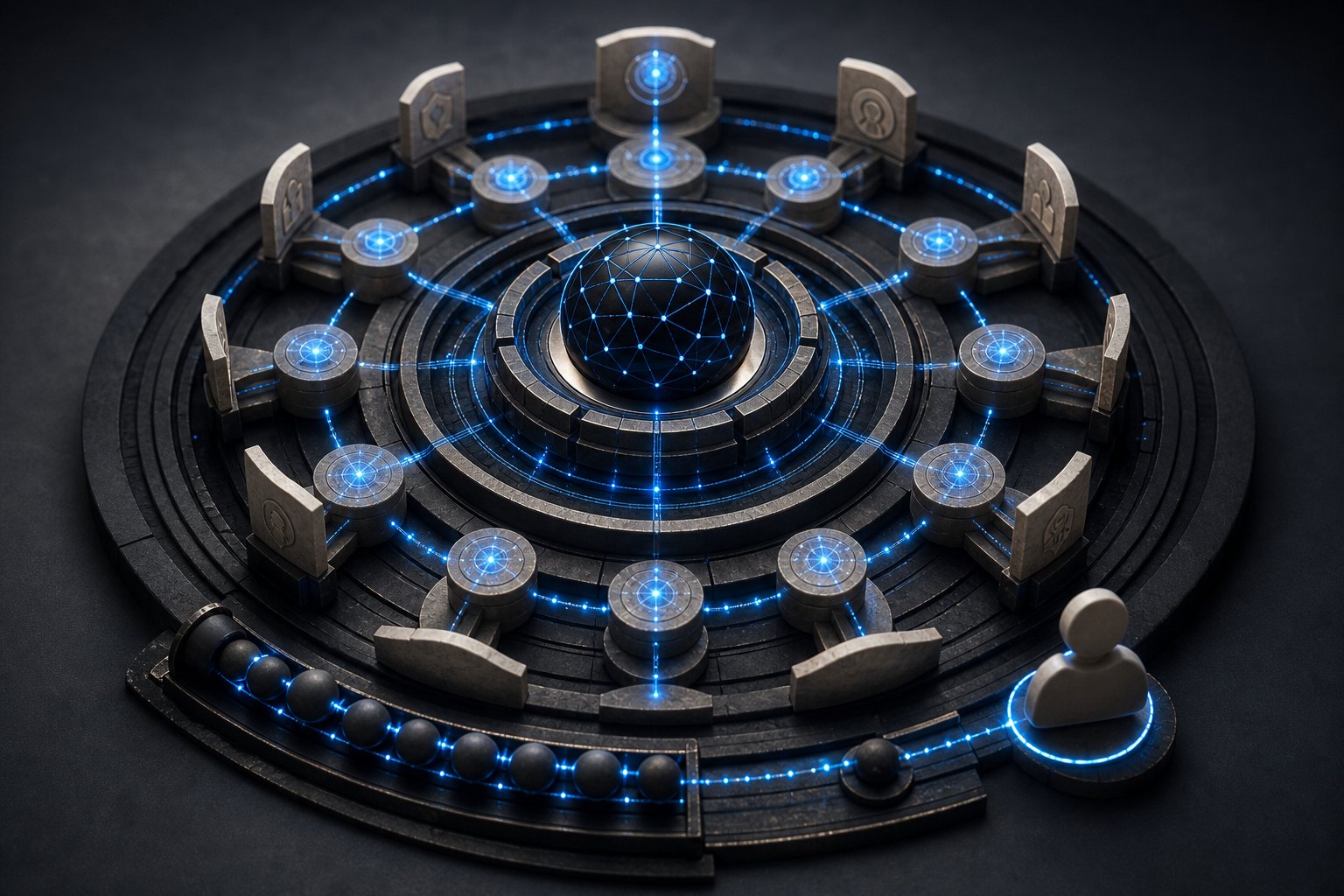
Most deployed models are static artifacts operating inside changing lives. Living Models defines a safer middle path: AI systems that adapt after release without becoming opaque, unstable, or invasive.
Premise
Static inference is not enough. A system that never updates from use can be powerful in general but weak in context: it forgets corrections, repeats mismatches, and treats every collaboration as partially new.

The project frames adaptation as layered change, not a single act of self-rewriting. Memory, preference, skill, policy, and model weights evolve at different speeds under different permissions.
The near-term target is a personal model stack that becomes measurably better for one user or one organization while preserving inspection, rollback, and consent.
Non-goal: autonomous recursive self-improvement. The system may propose adaptations, but persistent changes require logged approval or pre-authorized policy.
Why It Matters
The next advantage in AI will not come only from larger foundation models. It will come from compounding alignment: a system learning how a specific human thinks, edits, rejects, prioritizes, designs, and decides.
For creative and technical work, taste is revealed through iteration. A useful model should learn from the delta between its first answer and the human’s final correction.
The goal is competence alignment, not synthetic intimacy. The model should become better at the work:
- fewer repeated corrections;
- stronger first-pass relevance;
- stable recall of project decisions;
- better default tool choices;
- transparent reasons for behavioral change.
A model that adapts silently becomes a liability. A model that adapts visibly can become a cognitive instrument.
How It Works
The system separates adaptation into layers:
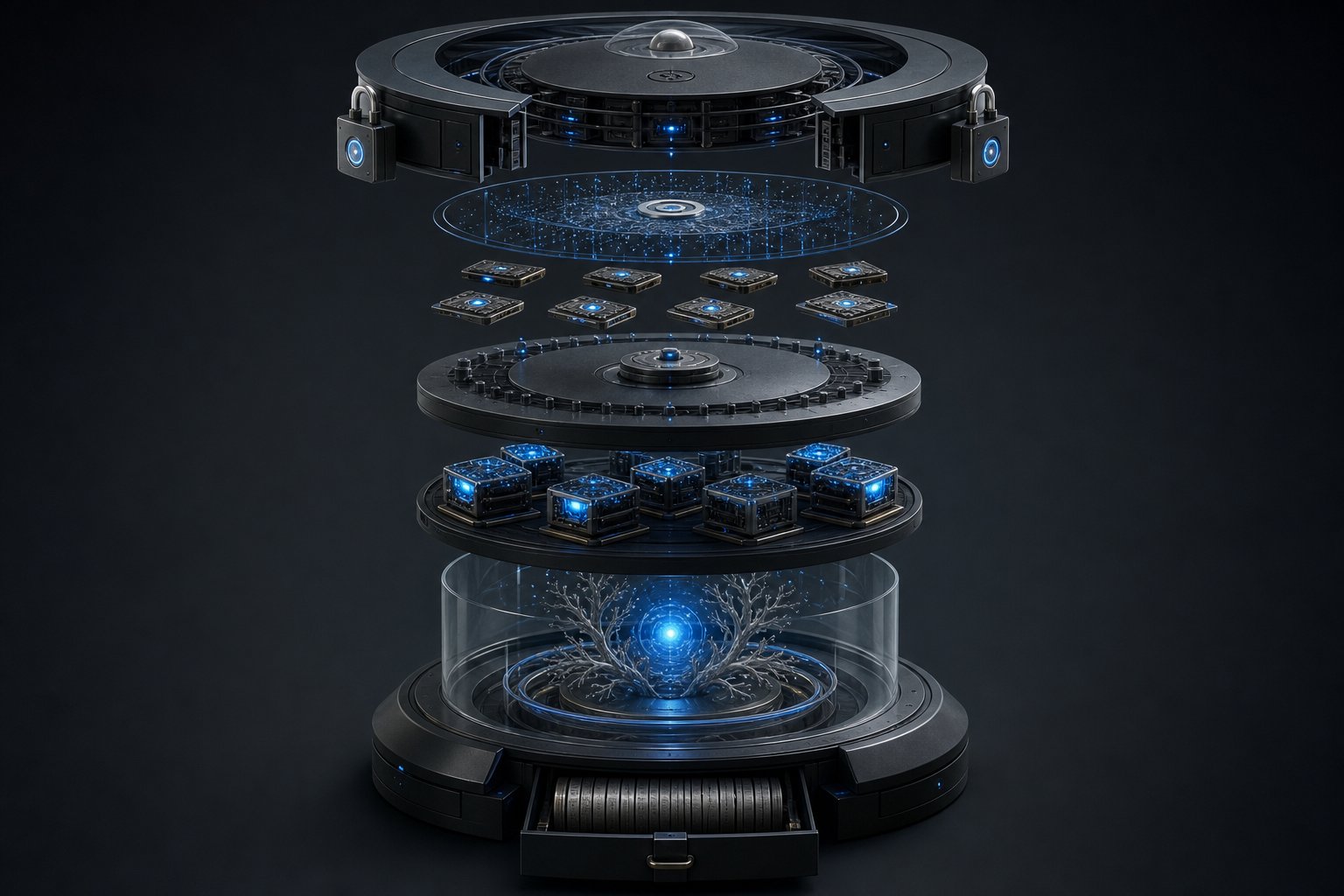
- Interaction: captures explicit feedback, edits, accepted outputs, rejected outputs, ratings, and repeated interventions.
- Memory: stores facts, preferences, decisions, and project context with source, timestamp, confidence, and deletion controls.
- Policy: adjusts tone, risk tolerance, formatting, workflow defaults, escalation behavior, and tool-use habits.
- Skill: trains or updates small adapters for repeated domains such as design critique, project writing, code review, or visual direction.
- Evolution: tests prompt variants, agent routes, tool chains, or lightweight architectures inside sandboxed evaluations.
- Governance: handles consent, versioning, audit logs, rollback, privacy boundaries, and drift detection.
The safest first version keeps the foundation model frozen. Continuous adaptation happens in memory and policy. Periodic adaptation happens through preference models or task-specific adapters.
Recent model-editing research shows that repeated edits can degrade reliability and induce forgetting, so weight changes are last-mile interventions, not daily personalization.
Neuroevolution belongs in sandboxed search: agent strategies, routing policies, and modular architectures. It is less practical as constant user-level learning because compute cost, evaluation noise, and safety review become limiting factors.
The main failure modes are catastrophic forgetting, reward hacking, privacy leakage, data contamination, personality overfitting, and silent drift. Every persistent update is treated as a change request, not a side effect.
Next
Build a constrained personal adaptive agent for one domain: Atlas project writing, design critique, or project planning.

Run the proof across 30–50 sessions and track:
- correction count per output;
- first-pass acceptance rate;
- preference recall accuracy;
- regression on safety and quality tests;
- number of memory edits or rollbacks;
- user-visible explanation for each persistent update.
Pass condition: after 50 sessions, the agent reduces repeated corrections by at least 30% without increasing safety regressions or false memory recall.
The first prototype should avoid direct weight self-modification. Prove memory, preference tuning, evaluation gates, and rollback first. Only after the system can explain and reverse its own adaptations should it test neuroevolution or self-modifying modules in a sandbox.
Generation Prompts
thumbnail living adaptive AI model shown as a layered neural architecture, stable matte-black core surrounded by memory nodes, policy rings, skill adapters, evaluation gates, rollback timeline, and human approval signals, graphite and warm neutral materials with electric blue data paths, studio-lit cinematic depth, hyper-real technical clarity, striking 3:2 hero composition
adaptation-stack exploded cross-section of personal AI adaptation layers, interaction capture layer feeding verified memory cards, policy controls, skill adapters, sandbox evolution chamber, and governance shell with consent locks and audit logs, precision parametric components, off-black and neutral palette with blue highlights, hyper-real studio render, orthographic technical view
evaluation-gate adaptive agent proof-of-work dashboard for fifty sessions, correction count graph, first-pass acceptance meter, preference recall score, safety regression checks, rollback events, and explanation receipts converging into a pass condition gate, minimal graphite interface on frosted panels, blue signal glow, neutral illumination, crisp product UI render
static-vs-living split-screen comparison of a frozen model artifact and an adaptive living model stack, left side rigid sealed monolith, right side modular layers updating at controlled speeds, memory preference policy and skill bands visibly separated, matte graphite surfaces with blue inspection lines, soft studio lighting, clean explanatory diagram, 3:2 aspect