Personal Designs
Everyday objects should be shaped around the contact zones where anatomy transfers pressure, balance, rest, and force into the built world.
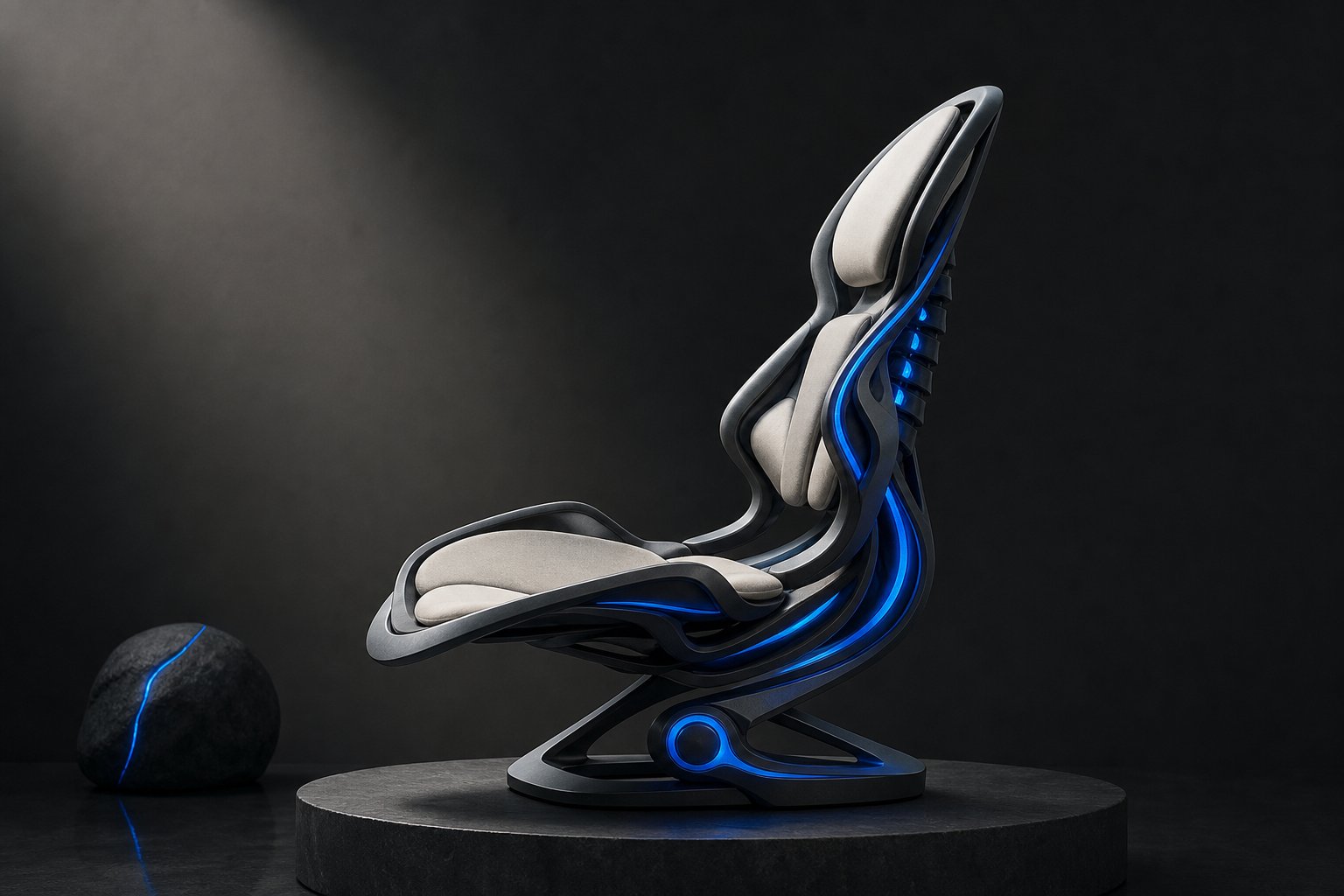
Every object touching the body is a force interface: a chair holds posture, a skate converts balance into motion, a handle turns grip into work.
Premise
Most everyday objects are designed around category conventions before they are designed around the body. Chairs look like chairs. Benches satisfy public-space codes. Tool handles follow industrial precedent. Beds become layered rectangles. The body absorbs these defaults as pressure, compensation, fatigue, and posture drift.
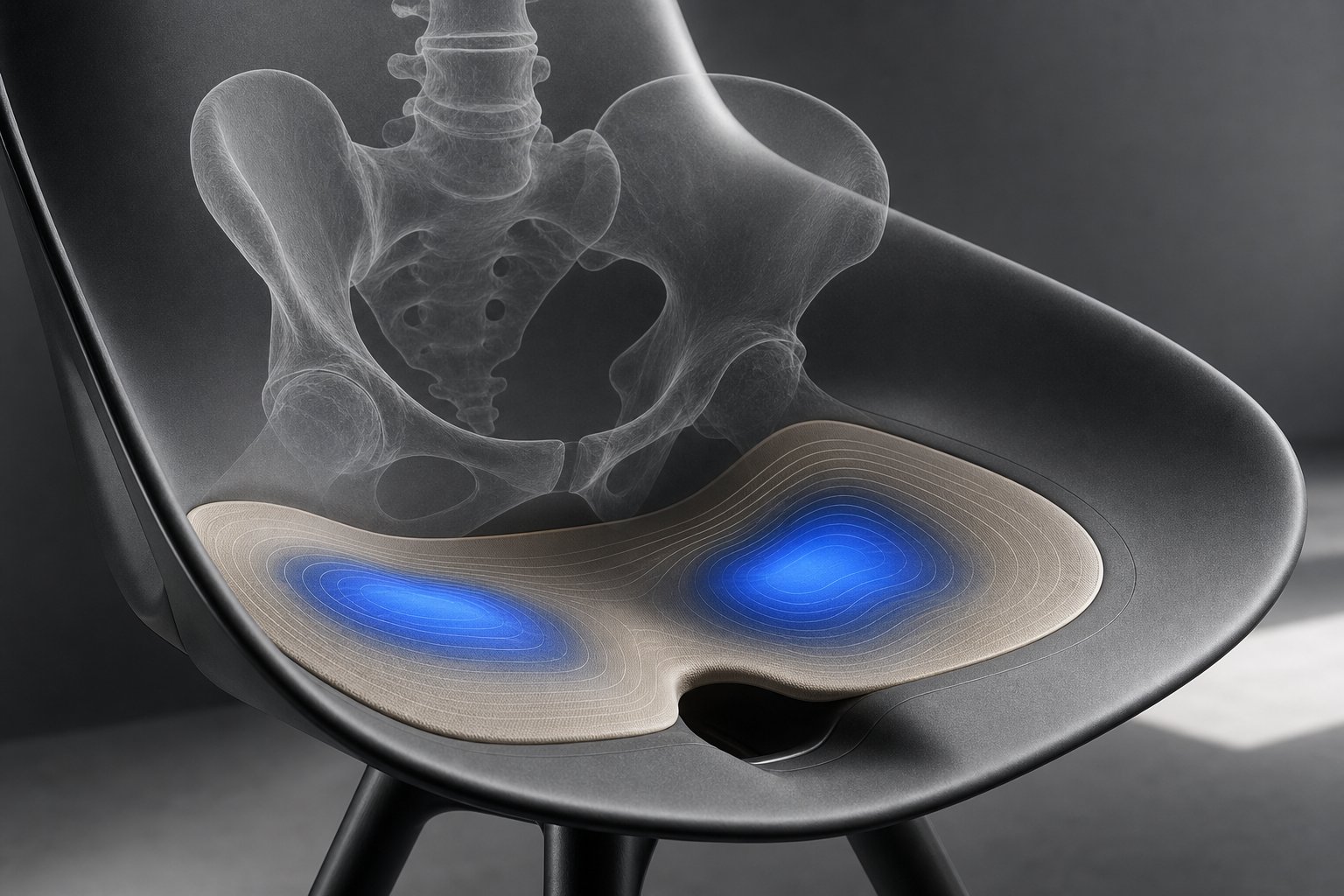
Body Interface treats the contact zone as the primary design site.
The first questions are mechanical, not visual:
- Where does the body meet the object?
- What force passes through that contact?
- What posture, movement, or recovery state is required?
- Where does fatigue appear after 5, 20, or 60 minutes?
- Which parts must flex, breathe, resist, clean, or be replaced?
The object becomes a mediator between anatomy and world, not a styled shell around a familiar product type.
Why It Matters
Bad body interfaces fail slowly: pressure concentrates, joints compensate, fatigue becomes normal. A poor bench shortens rest. A bad chair trains posture drift. A badly shaped grip wastes force through wrist deviation. A skate with weak ankle logic turns movement into risk.
The opportunity is not to make everything “smart.” Most gains should happen before electronics:
- geometry that distributes pressure instead of concentrating it;
- material gradients that absorb load without becoming vague;
- modular contact surfaces that fit more than one body type;
- passive mechanics that guide posture or motion without instruction;
- repairable structures that survive sweat, cleaning, and load cycles.
The human-centered claim is only valid if the object improves the exchange: weight, friction, leverage, fatigue, balance, heat, and time.
How It Works
The method is a body-contact loop: map, fail, shape, test, revise.
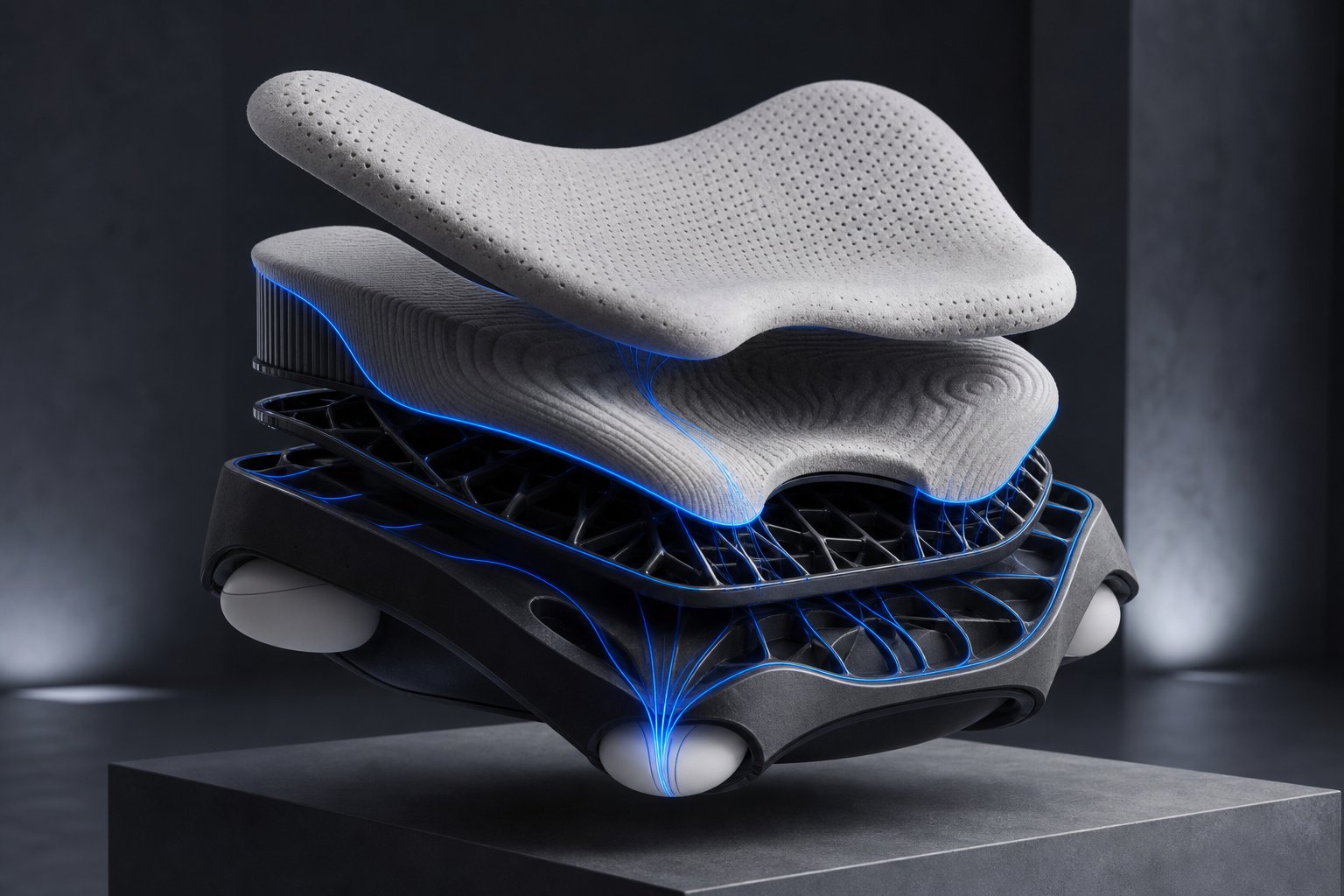
- Map the contact. Identify anatomical landmarks, pressure points, shear zones, grip paths, balance axes, and motion range.
- Define the failure. Name one measurable failure: pressure spike, wrist deviation, ankle instability, lumbar collapse, circulation restriction, or cleaning failure.
- Shape the passive mechanism. Use curvature, ribs, compliance, perforation, layered density, surface texture, or modular inserts before adding sensors.
- Prototype quickly. Use foam, printed shells, CNC molds, soft goods, or modular frames according to load.
- Test against the body. Measure pressure distribution, posture drift, fatigue, motion stability, and durability.
- Refine the interface. Remove visual gestures that do not improve contact, force transfer, repair, or comfort.
The hard constraint is variation: percentile ranges, asymmetry, age, disability, and subjective comfort prevent one universal form.
Research branches stay broad, but proofs stay narrow: rest objects, motion objects, work tools, and public supports. ArX can accelerate anatomical references, geometry variants, material studies, and visual comparison. It does not replace physical validation. Comfort cannot be rendered into truth.
Next
The first proof should be a pressure-mapped bench or chair study.
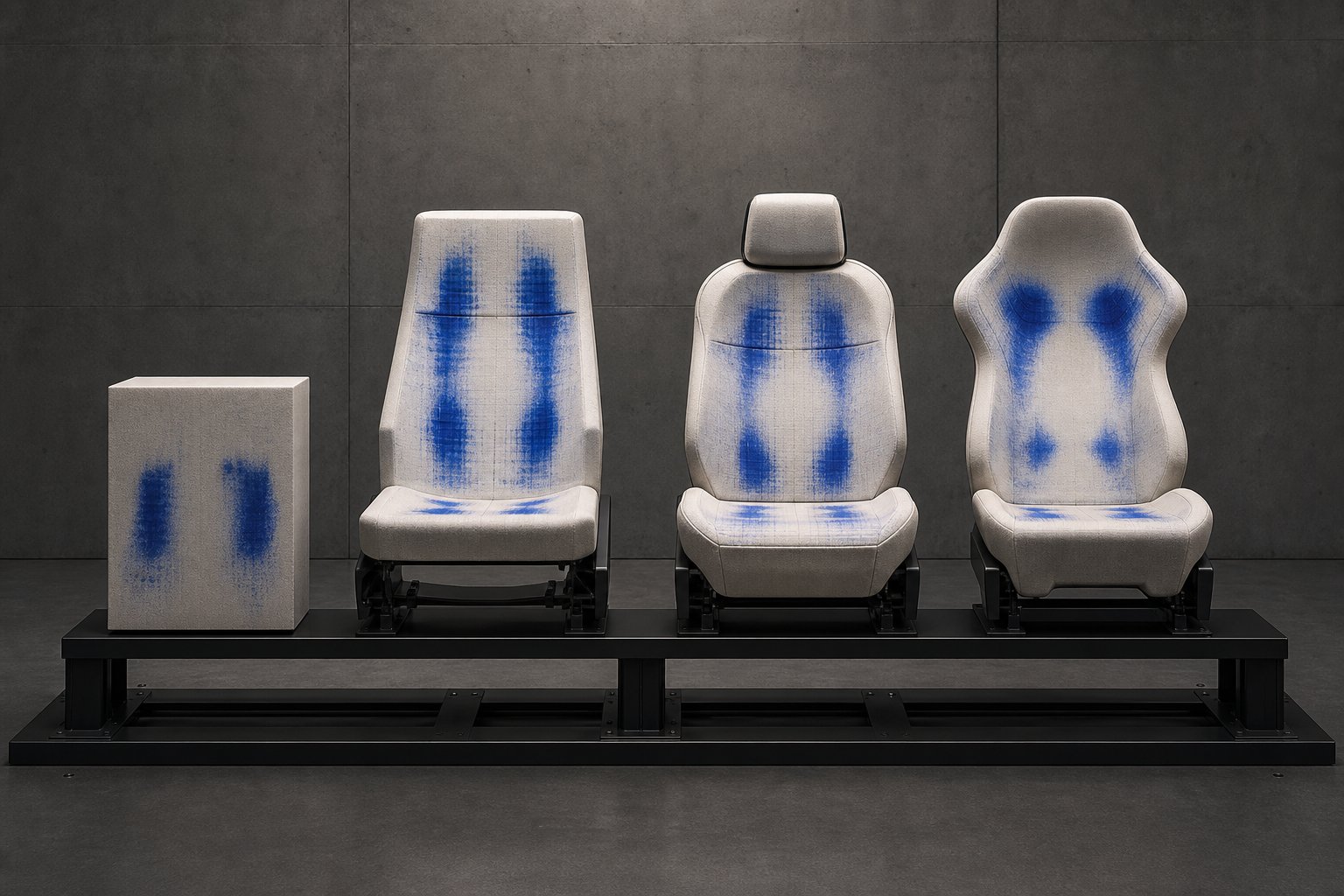
Build three seat geometries against one benchmark: lower peak pressure and reduce posture drift versus a flat reference during a 30-minute seated test, without cushions, electronics, or complex adjustment. Record pressure distribution, pelvis/lumbar compensation, user notes, cleaning practicality, and manufacturing complexity.
Success is not a beautiful chair. Success is a contact surface that lowers bodily effort without adding complexity.
After that, expand into a small series: one object, one body relationship, one mechanism, one prototype-ready proof.
Generation Prompts
Image Prompt Photorealistic studio render of a sculptural ergonomic chair prototype shown as a body-contact study, pressure-distributing seat geometry, exposed layered materials, matte charcoal frame, soft neutral cushioning, subtle electric blue contact-zone highlights, clean negative space, premium industrial design, crisp lighting, no text.