Personification Characters
A sculptural character universe turns ancient roles and modern emotions into collectible figures whose anatomy, posture, material, and myth are derived from psychological force.
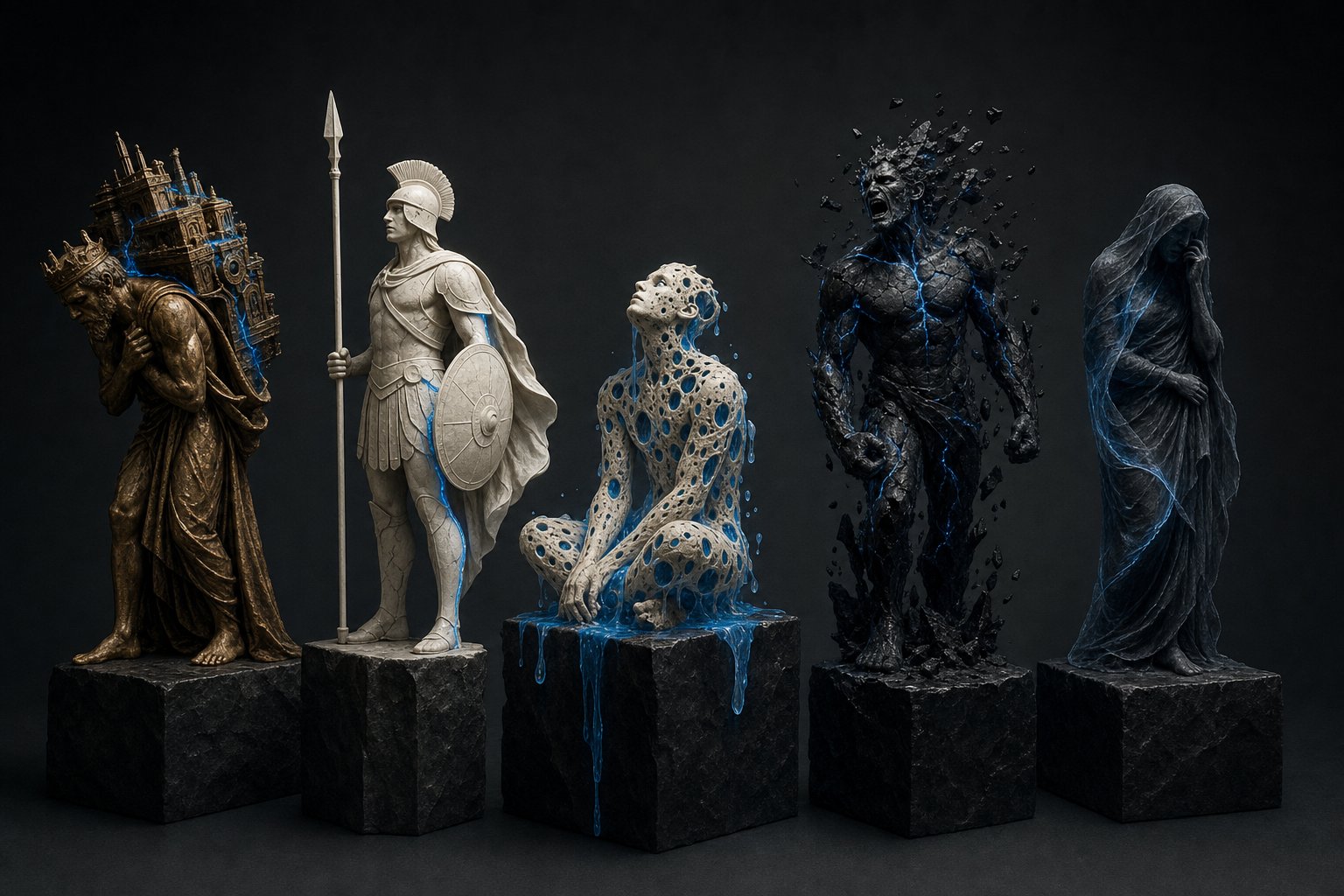
Old gods made invisible forces legible. This project rebuilds that function as a sculpture system for emotional and archetypal states, without religion, fantasy lore, or decorative symbolism.
Premise
Archetype Pantheon begins as a five-figure capsule, then expands into two families: human archetypes and emotional gods.
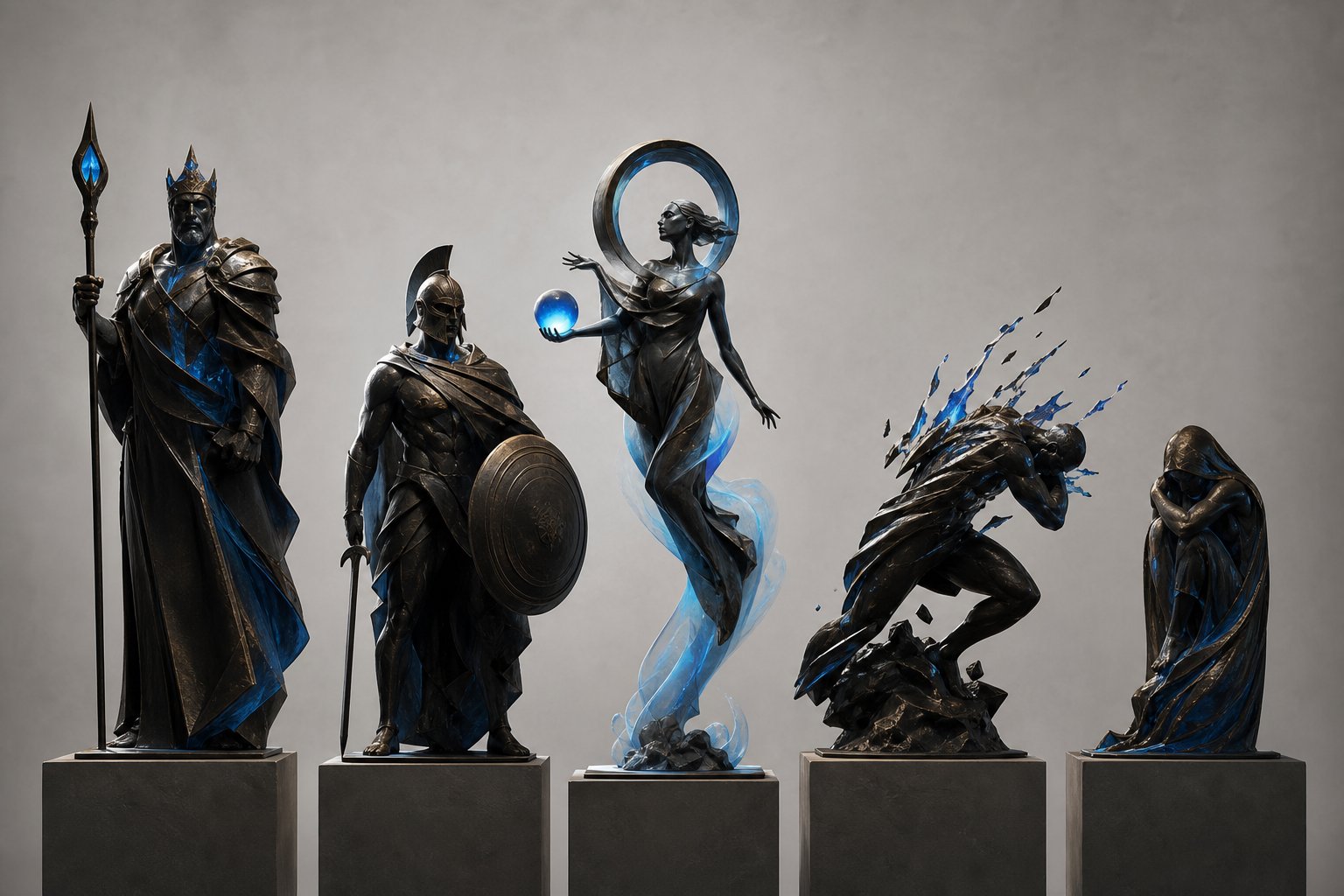
Human Archetypes represent roles humans perform or pursue: King, Emperor, Warrior, Hero, Magician, Wizard, Lover, Dreamer.
Emotional Gods represent forces humans endure, suppress, perform, or channel: Shyness, Anger, Jealousy, Fear, Happiness, Joy, Love, Sex, Courage, Strength.
The project is not a fantasy lineup with symbolic decoration added afterward. Each figure must be generated from a psychological mechanism. Anger is not “fire armor.” It is compression, heat, forward weight, clenched asymmetry, ruptured surface, and protective pain. Shyness is not weakness. It is inward architecture, partial concealment, sensitivity, and defensive grace.
Why It Matters
Many collectible figures rely on genre codes — armor, weapons, wings, monsters, crowns — while the emotional mechanism stays generic.
This project treats character design as psychological anatomy. The question is not “what does the King wear?” but “what does sovereignty do to the spine, neck, hands, gaze, and burden of the figure?”
The value is a repeatable grammar:
- silhouette as first read
- posture as emotional truth
- material as inner state
- prop as symbolic function
- base as territory
- surface detail as memory
The system can scale from ZBrush busts and printable maquettes to resin figures, bronze editions, ceramic reliefs, talismans, and chess-like sets. The core remains the same: sculpture as a readable psychological object.
How It Works
Every figure is developed through a fixed matrix.
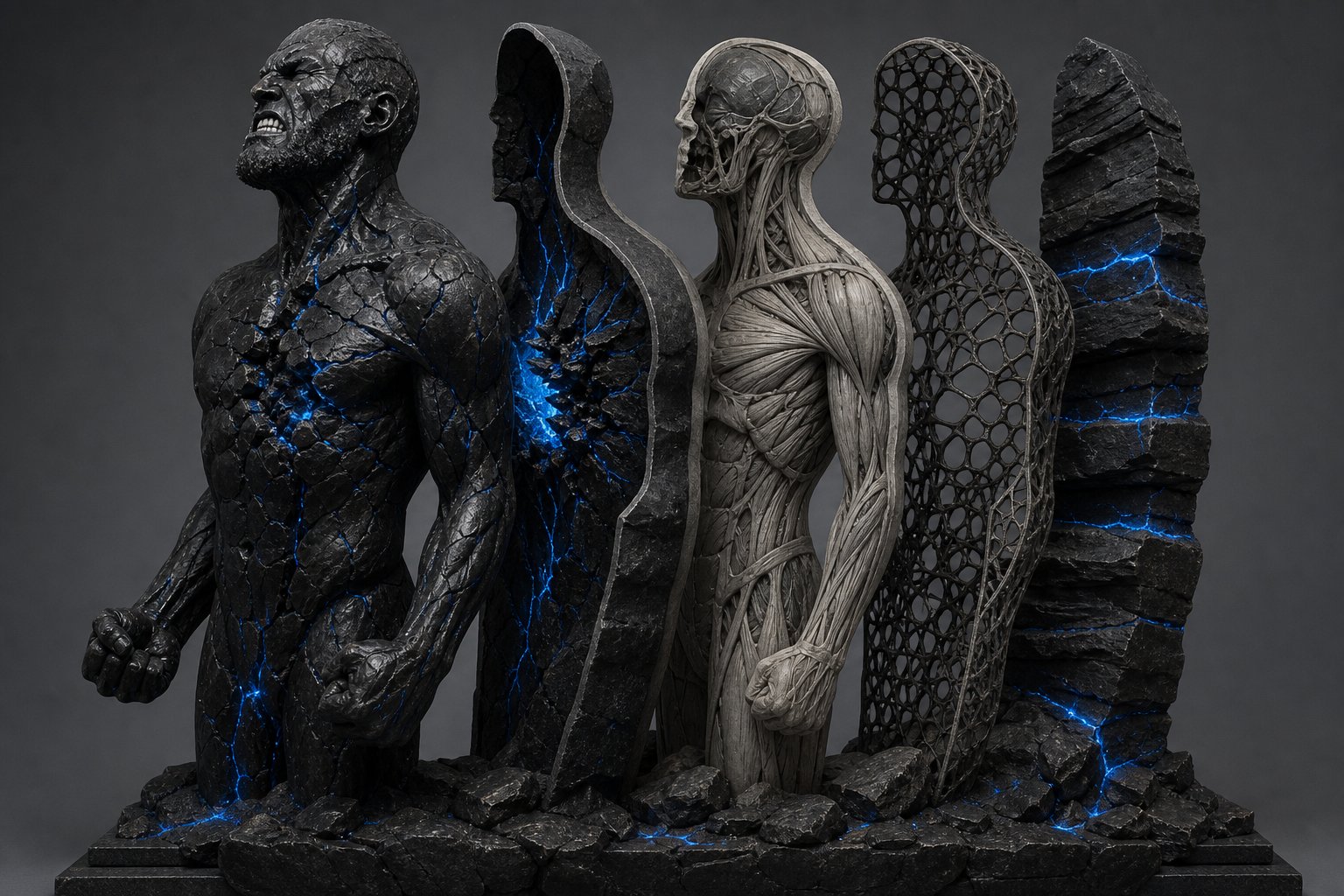
- Core wound: the hidden pressure that shapes the figure.
- Dominant posture: vertical, folded, lunging, floating, collapsed, guarded.
- Facial tension: brow, jaw, eyelids, mouth compression, gaze direction.
- Anatomical bias: elongated neck, heavy hands, compressed torso, exposed ribs, softened pelvis.
- Symbolic object: crown, blade, mask, veil, vessel, flame, thread, key.
- Material code: polished bronze, cracked obsidian, pale ceramic, translucent resin, dark steel, oxidized gold.
- Manufacturing limit: thin veils, floating limbs, and fragile props must resolve into printable separations, support-safe silhouettes, or castable solid forms.
- Contradiction: the force must contain its opposite.
First capsule:
- The King: vertical mass under pressure; crown as load, shoulders as architecture.
- The Warrior: disciplined violence; controlled stance, scarred geometry, weapon as oath.
- The Dreamer: porous boundaries; softened anatomy, floating gesture, unstable contact with the base.
- Anger: volcanic compression; forward lean, ruptured surface, clenched hands, pain beneath aggression.
- Shyness: inward fold; guarded center, veiled face, small radiance visible only up close.
The benchmark is three-layer readability: strong silhouette at 10 meters, emotional read at 2 meters, symbolic reward at 20 centimeters.
Next
Build one complete archetype sheet and one bust for Anger or Shyness.
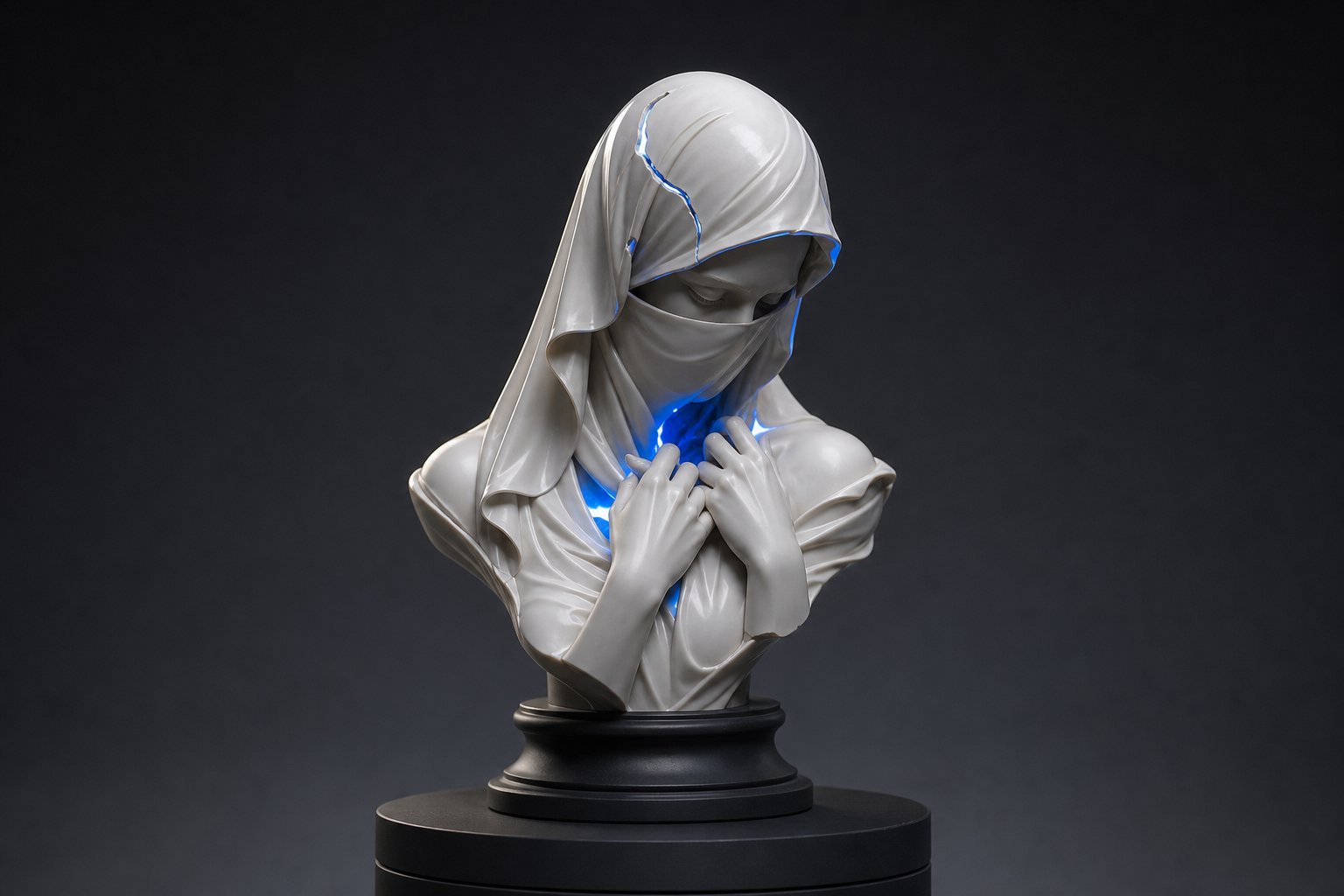
The sheet should include front and side silhouette, posture logic, facial study, symbolic object, material palette, base design, and a short myth fragment. Success means five blind viewers can identify the intended force from posture and form before reading the title.
The immediate risk is sprawl. The project should not expand beyond five figures until the grammar survives one physical prototype.
Generation Prompts
thumbnail five psychological archetype collectible sculptures arranged on dark stone plinths, burdened King, disciplined Warrior, porous Dreamer, volcanic Anger, veiled Shyness, each with distinct posture and silhouette logic, bronze, pale ceramic, cracked obsidian, translucent resin, matte charcoal gallery, sculptural side lighting, hyper-real studio render, 3:2 hero composition, full figures visible, no text
posture-matrix psychological anatomy matrix for one Anger figure, forward-weighted torso, clenched asymmetric hands, compressed neck, ruptured chest surface, protective pain visible under aggression, cutaway layers showing posture, wound, material code, and base territory, cracked obsidian and dark steel with electric blue fissures, controlled studio lighting, precise sculptural visualization, no text
prototype-bust complete Shyness bust prototype on a clean rotating sculptor base, veiled face partly concealed, inward shoulders, guarded hands near chest, small hidden radiance inside pale ceramic folds, printable separations subtly visible at veil and neck, matte graphite support base, soft frontal and side studio lighting, hyper-real ZBrush-to-resin maquette render, centered composition, no text
silhouette-lineup archetype pantheon silhouette study of five full-body figures, King vertical and loaded, Warrior grounded and controlled, Dreamer softened and floating, Anger compressed forward, Shyness folded inward, simplified dark forms on neutral plinths, minimal material hints in bronze and blue resin accents, crisp rim lighting, orthographic gallery presentation, hyper-real concept sheet without labels