Posable 3D Printed Skeleton
A reusable 3D-printed skeleton with removable clay skin lets artists test gesture, balance, and stylized anatomy as physical mass instead of flat reference.
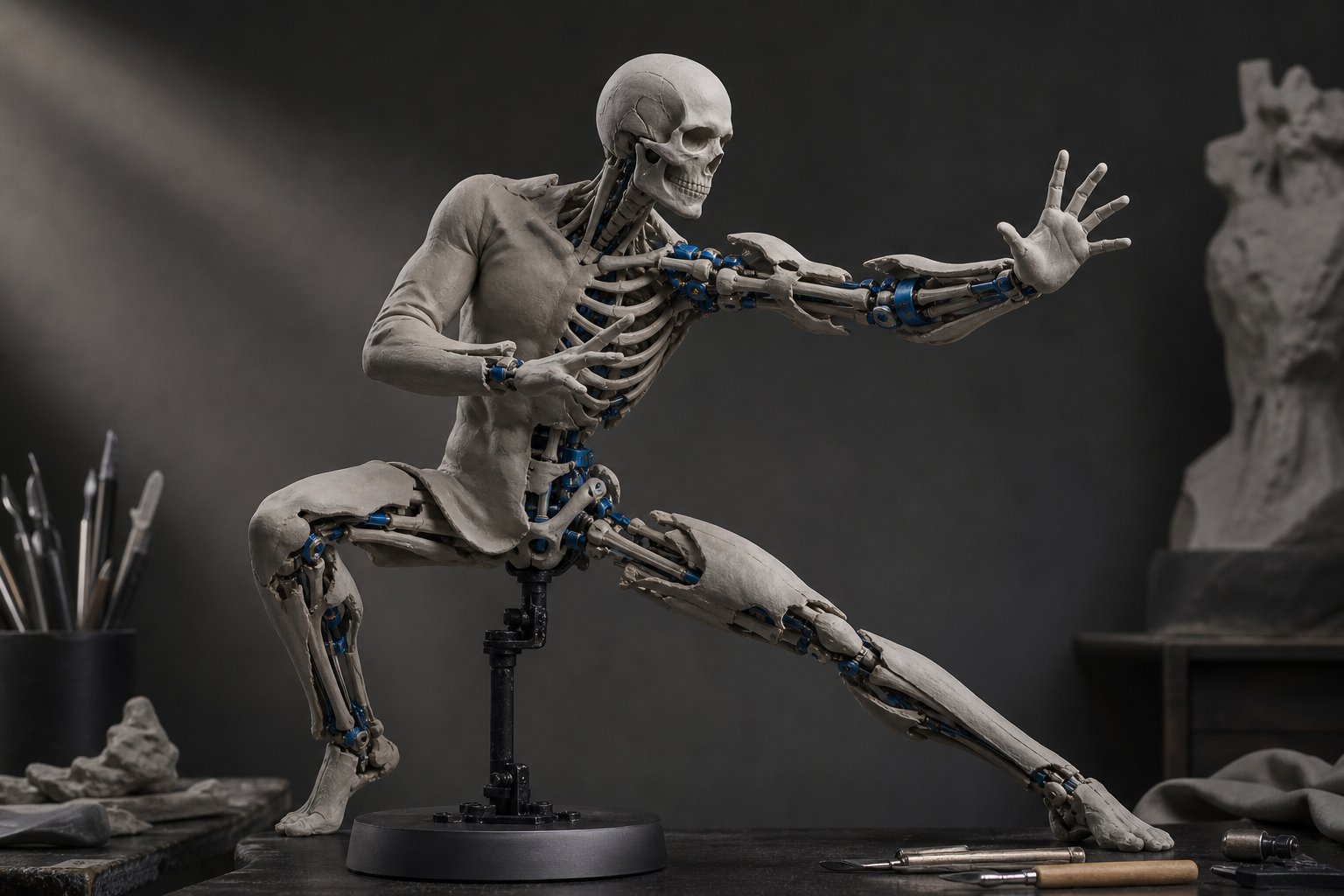
A figure-study tool for testing bodies as mass, torque, balance, and silhouette — not just contour.
Premise
Flat reference teaches contour and proportion, but hides load paths. It does not show where the pelvis carries the rib cage, how a raised arm changes spinal compression, why a boxing guard collapses inward, or why a skating pose needs an invisible support vector.
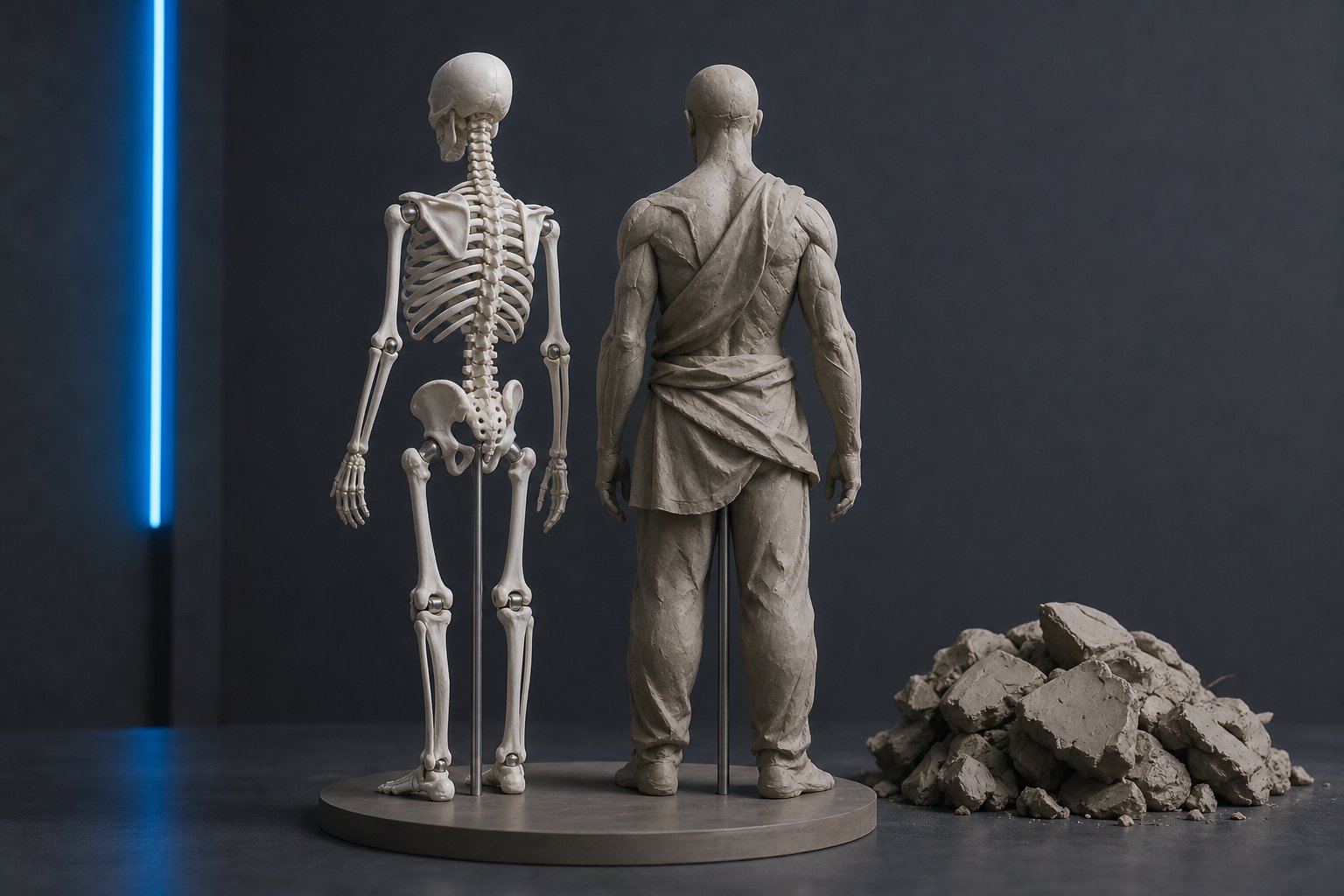
Kinetic Armature proposes a reusable human skeleton that can be posed, locked, and covered with removable clay. The skeleton provides structure. The clay becomes temporary muscle, fat, cloth bulk, or stylized volume. The artist can mass a figure, destroy it, re-pose it, and rebuild it without starting from wire every time.
The hard limit is clay weight: every pose is a negotiation between joint friction, support points, and material thickness. The target is not a collectible figure, anatomical mannequin, or polished sculpture base. It is a physical thinking tool for gesture, exaggeration, and pose research.
Why It Matters
Strong character poses depend on believable compression, counterweight, and asymmetry. Digital posing can hide gravity; this system makes weak balance visible. Life drawing trains observation, but the page still compresses volume into line. Traditional armatures work, but they are slow to rebuild and poor at repeatable pose testing.
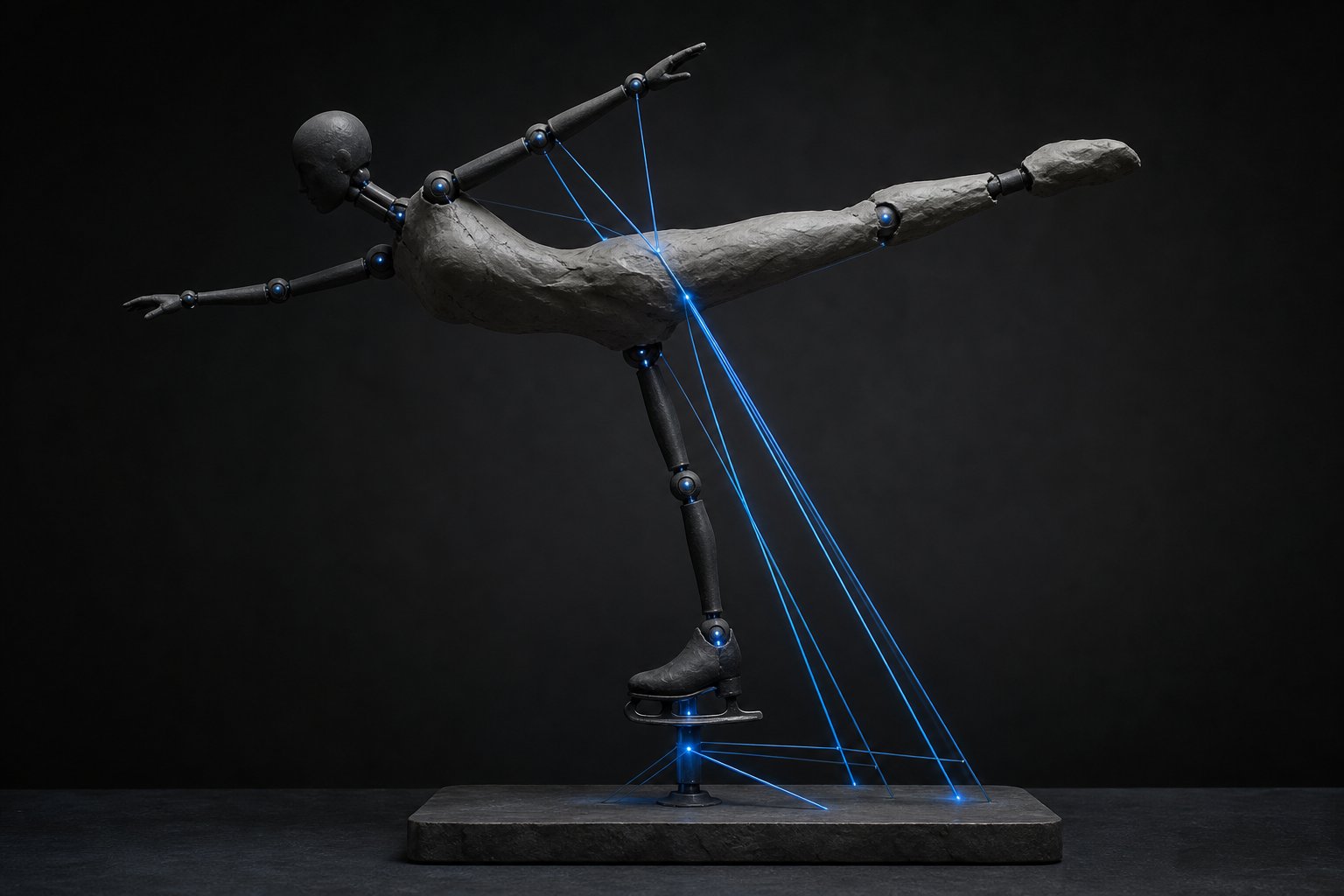
A clay-over-skeleton system gives artists a middle layer:
- Gesture before detail: pose, rhythm, and silhouette are solved before surface anatomy.
- Physical resistance: gravity and joint torque expose weak poses immediately.
- Fast iteration: clay can be removed, reused, and reshaped across many studies.
- Stylization control: realistic, heroic, compressed, or exaggerated bodies can share one skeletal base.
- Training value: anatomy becomes movable architecture, not static labels.
The strongest use cases are poses where balance and compression matter: yoga lunges, martial arts strikes, ice-skating extensions, katana stances, boxing guards, tai chi transitions, seated rest, and relaxed contrapposto.
How It Works
The first build is a 1:6 or 1:8 articulated skeleton printed in modular sections.
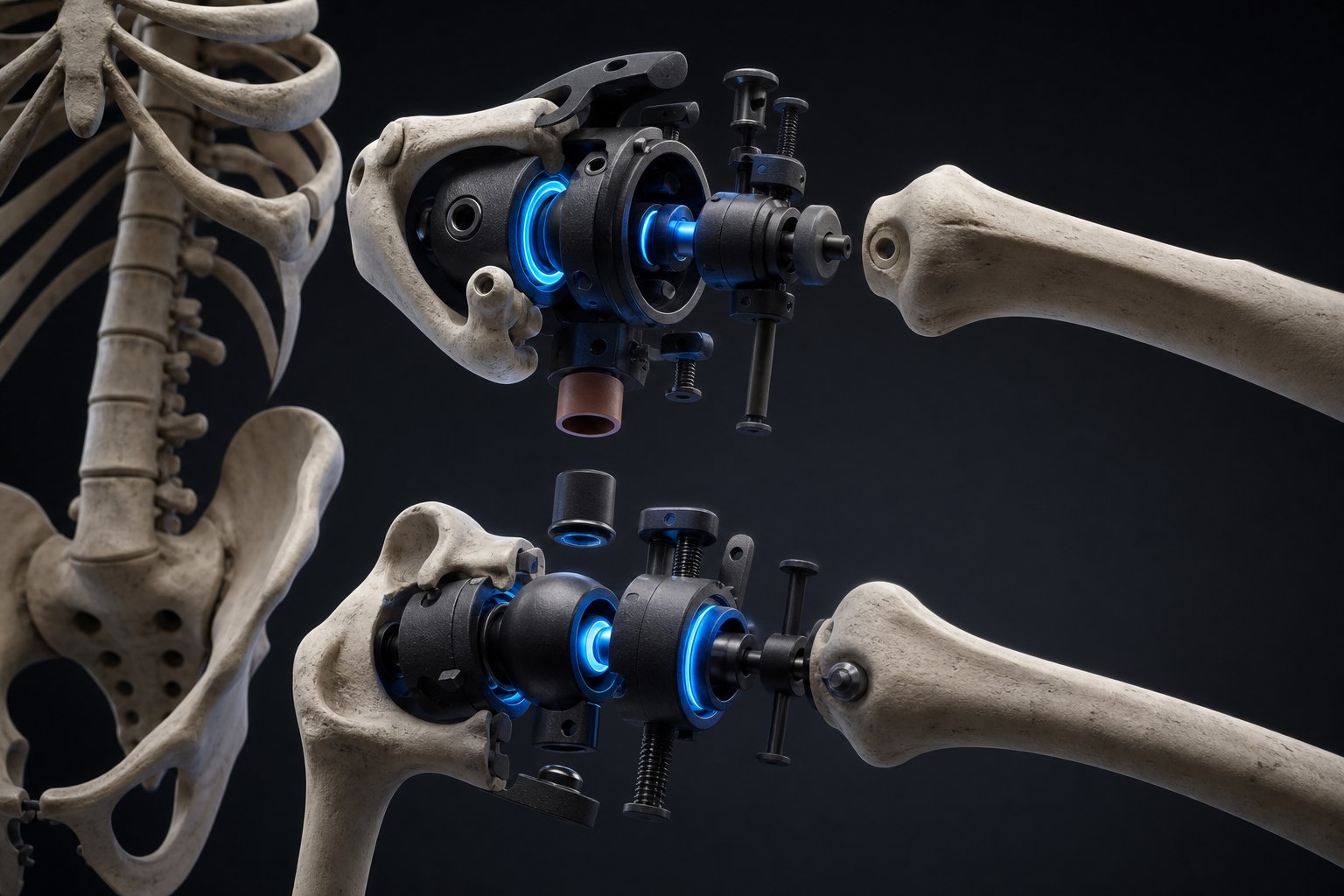
Core components:
- Landmark skeleton: skull block, rib cage, pelvis, clavicle line, scapula plates, elbows, knees, hands, and feet marked as sculptural anchors.
- Lockable joints: high-torque sockets at shoulders, hips, spine, knees, elbows, ankles, wrists, and neck, using screw clamps, elastic tension, or metal-pin reinforcement.
- Clay skin: reusable oil-based clay applied as muscle mass, fat, cloth bulk, or stylized form.
- Support base: magnetic feet, rods, or removable rig points for single-leg poses and airborne gestures.
- Swappable modules: alternate hands, feet, spine lengths, pelvis widths, and limb proportions for different body types.
The main engineering issue is load-bearing stability under clay. Extended arms, deep lunges, and skating arabesques create torque that will expose weak sockets fast. PLA is acceptable for geometry tests. Durable joints likely need PETG, nylon, resin, threaded inserts, or metal pins.
Oil-based clay is reusable but heavy. Polymer clay holds detail but slows iteration. A lightweight filler or foam wrap may reduce load, allowing a thinner clay layer for massing.
Next
Build one proof prototype: torso, pelvis, full limbs, simplified hands and feet, and a neutral skull block.
Benchmark it against five pose families:
- relaxed contrapposto
- deep yoga lunge with spinal twist
- boxing stance with raised guard
- martial arts kick or katana step
- ice-skating arabesque or single-leg extension
Each pose must hold for 30 minutes without joint collapse, major clay sag, or base failure. Document joint drift, clay weight, silhouette readability, and reset time.
The next refinement is a modular gesture skeleton kit: interchangeable spines, proportion sets, hands, feet, rig bases, and a small pose library designed specifically for sculptural study.
Generation Prompts
image-prompt Photorealistic studio render of a posable 3D-printed human skeletal armature in an exaggerated martial arts stance, warm gray clay partially applied and peeled back to reveal lockable joints, anatomical landmark plates, minimal magnetic base, artist workbench, sculptural side lighting, premium neutral palette, crisp detail, no text.