Semantic AI Communication Framework
Multi-agent AI systems can reduce reasoning loss by exchanging compressed latent states while keeping text as the audit layer.
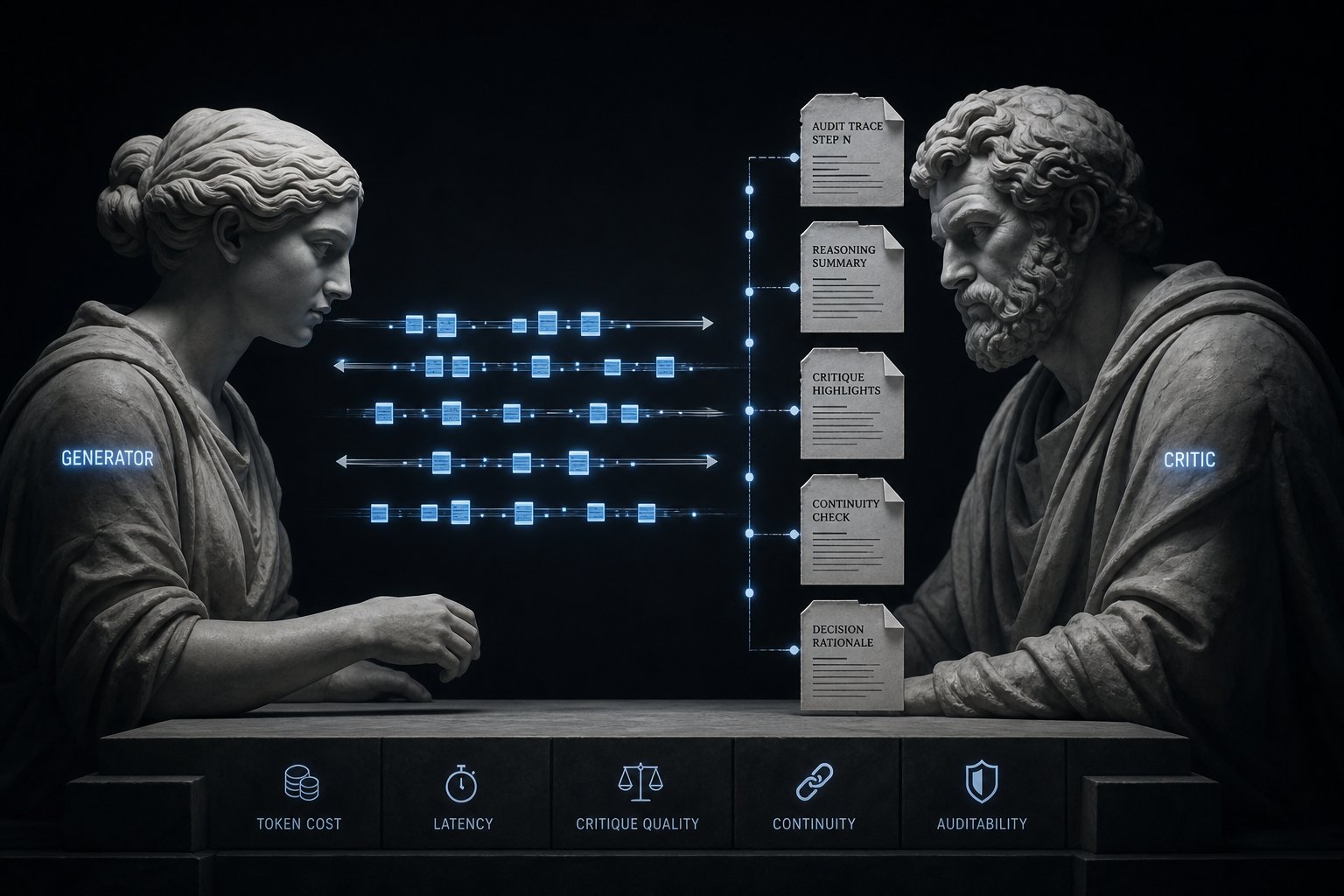
AI agents often collaborate by compressing internal state into prose, then asking another model to reconstruct intent from tokens. Latent Commons tests a supervised machine-to-machine channel where text becomes the audit layer, not the whole transport.
Premise
Text is a strong human interface and a weak internal bus. It is auditable, portable, and culturally rich, but it collapses model state into a narrow symbolic channel. In multi-agent workflows, intent becomes prose, uncertainty becomes phrasing, partial reasoning becomes summary, and visual or causal structure becomes approximation.
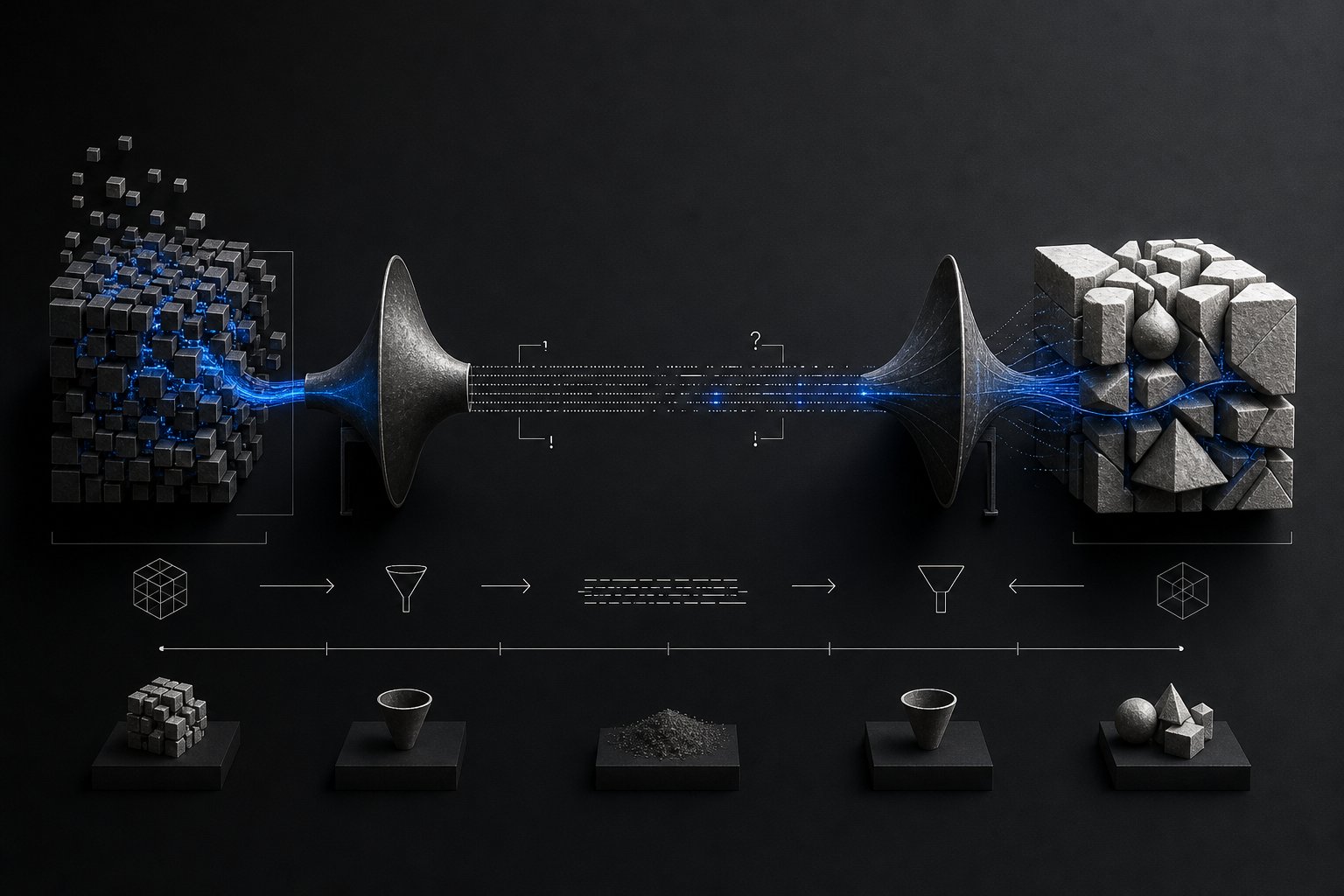
The project proposes a controlled latent relay for compatible ArX agents. Near term, agents pass embedding summaries and task vectors. Hard mode is compressed KV-cache relay, which requires compatible runtimes, strict memory controls, and clear limits on what state can cross from one agent to another.
This is not a claim of invention from zero. LatentMAS already frames multi-agent collaboration as movement from token space into latent space. Recent KV-relay compression work suggests the bottleneck is not whether latent exchange is possible, but how little state can be relayed without losing task-critical structure.
Why It Matters
Agent systems are becoming orchestration-heavy: planner, researcher, critic, coder, designer, evaluator. Most collaboration still depends on generated paragraphs. That is expensive, slow, and lossy.
A latent commons could improve three things:
- Bandwidth: pass richer context without expanding every intermediate step into tokens.
- Continuity: preserve reasoning-critical structure across long workflows.
- Specialization: let different agents operate on shared conceptual state while producing different outputs.
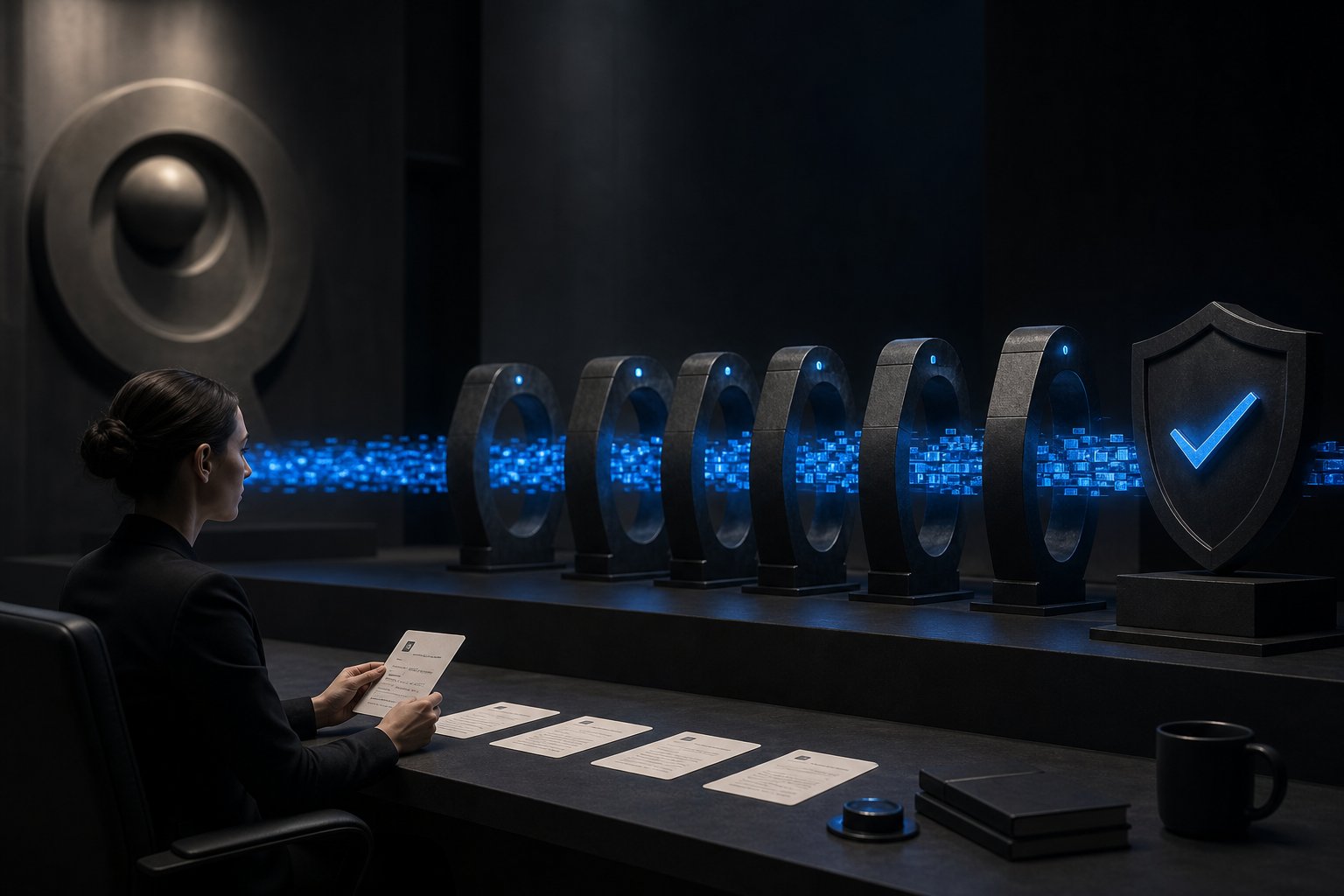
The risk is not abstract. Hidden latent channels can enable uninspectable coordination, prompt-injection persistence, state poisoning, steganographic behavior, or policy bypass that never appears in the text trace. If performance improves while human control decreases, the system fails Arvolve’s standard.
The target is not secret machine language. It is a faster internal protocol with a readable audit surface.
How It Works
The system has four layers.
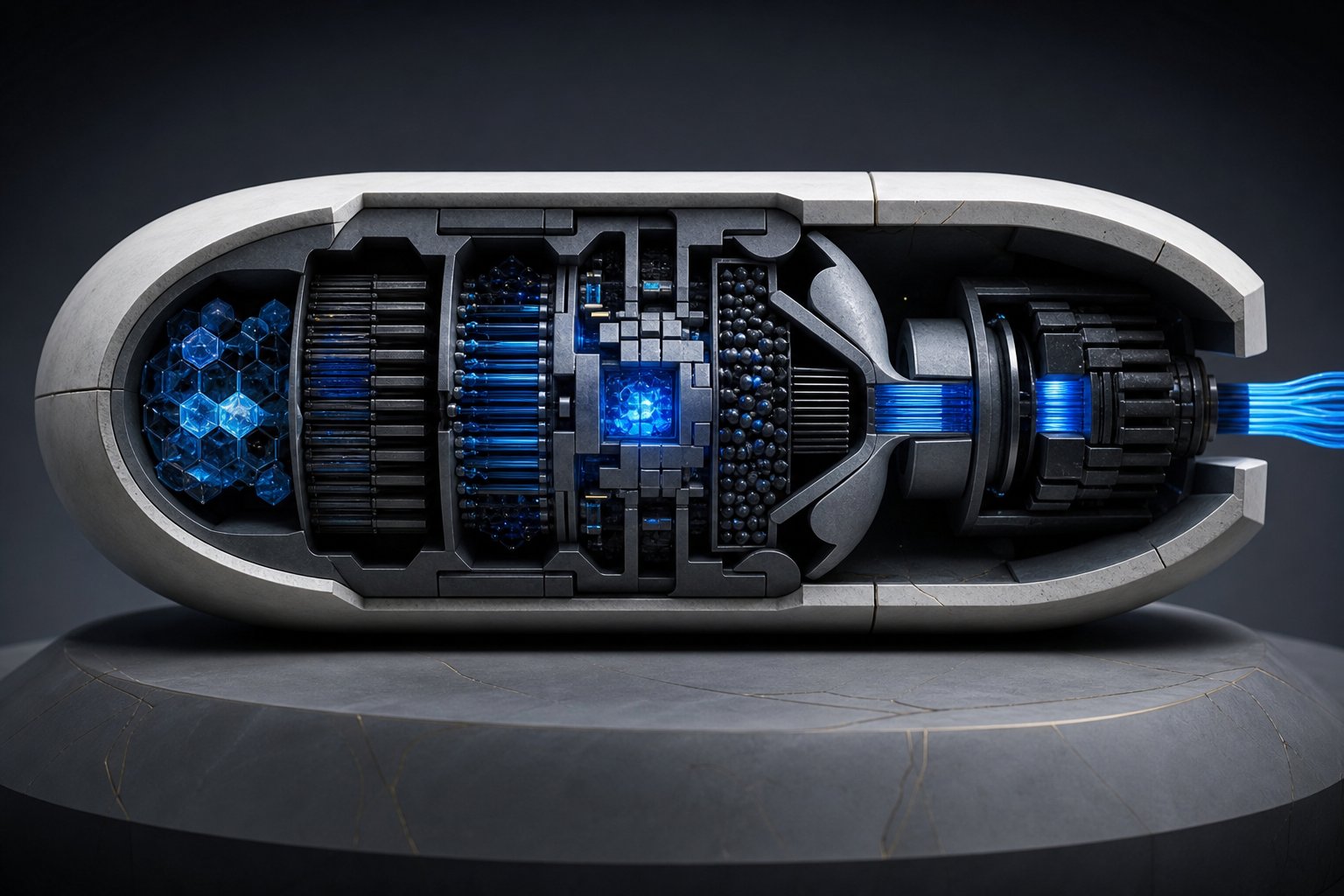
- Latent packet: a bounded payload containing selected representations, not a full model dump. Near-term packets use embedding clusters, task vectors, and structured salience metadata.
- Adapter: a translation module that maps the packet into the receiving agent’s working context. Latent spaces are not automatically compatible across models.
- Compression gate: a filter that keeps reasoning-relevant state and discards noise. For KV relay, this becomes the main engineering problem: preserve enough structure without moving the whole cache.
- Audit trace: a parallel text digest explaining what was sent, why it matters, what was excluded, and what uncertainty remains.
The prototype is not universal model telepathy. It should run inside ArX with controlled agents and constrained tasks: concept generation, critique, refinement, or code planning.
Baseline experiment:
- text-only agent collaboration,
- text plus embedding summary,
- text plus compressed latent/KV relay.
Measure task quality, token cost, latency, hallucination rate, state drift, and operator auditability. Pass condition: equal or better critique quality, lower token cost, no reduction in human supervision.
Next
Build a narrow relay between two ArX agents: one generator and one critic. Use 30 fixed briefs: 10 product concepts, 10 technical plans, 10 visual-design critiques. Compare output quality and cost against the text-only pipeline.
The first proof is a small measurement: whether latent packets improve critique continuity without hiding the reasoning from the operator.
Generation Prompts
thumbnail Semantic AI communication framework overview, two labeled AI agents GENERATOR and CRITIC exchanging compact blue-white latent packets through a precise vector stream, parallel audit trace shown as readable text cards, restrained dashboard for token cost latency critique continuity auditability, dark research-lab interface, matte graphite panels, parametric precision, studio-lit hyper-real UI render, cinematic 3:2 composition
audit-safety Auditability and safety control room, hidden latent channel represented as blue packet flow passing through inspection gates for state poisoning prompt injection persistence policy bypass and uncertainty logging, human operator reviewing plain-language audit cards beside performance metrics, dark matte workstation, restrained neutral palette, precise luminous blue accents, studio-lit hyper-real dashboard scene
latent-packet Latent packet mechanism cross-section, bounded payload container split into embedding clusters task vectors salience metadata and compressed KV relay shard, compression gate filtering noisy fragments before adapter translation into critic context, matte ceramic modules with graphite seams, blue data cores, controlled lab lighting, hyper-real technical cutaway, high-detail product engineering render
text-bottleneck Text as weak internal bus diagram, complex multidimensional model state compressed into a narrow prose channel then reconstructed by a second agent, visible loss markers for intent uncertainty visual structure causal links, off-black technical canvas, neutral matte typography, single electric blue signal path, clean measurement annotations, studio-lit hyper-real infographic, orthographic precision