Sketch vs Final Render
As execution quality becomes automated, the scarce creative value shifts from polish to original framing, message, and narrative intent.

Polish is becoming cheap; intent is not. The bottleneck is moving upstream: from making the image impressive to making it necessary.
Premise
For most visual media, execution was the public proof of authorship. Drawing, modeling, lighting, retouching, editing, and rendering required trained labor. High polish signaled competence because it was difficult to produce.
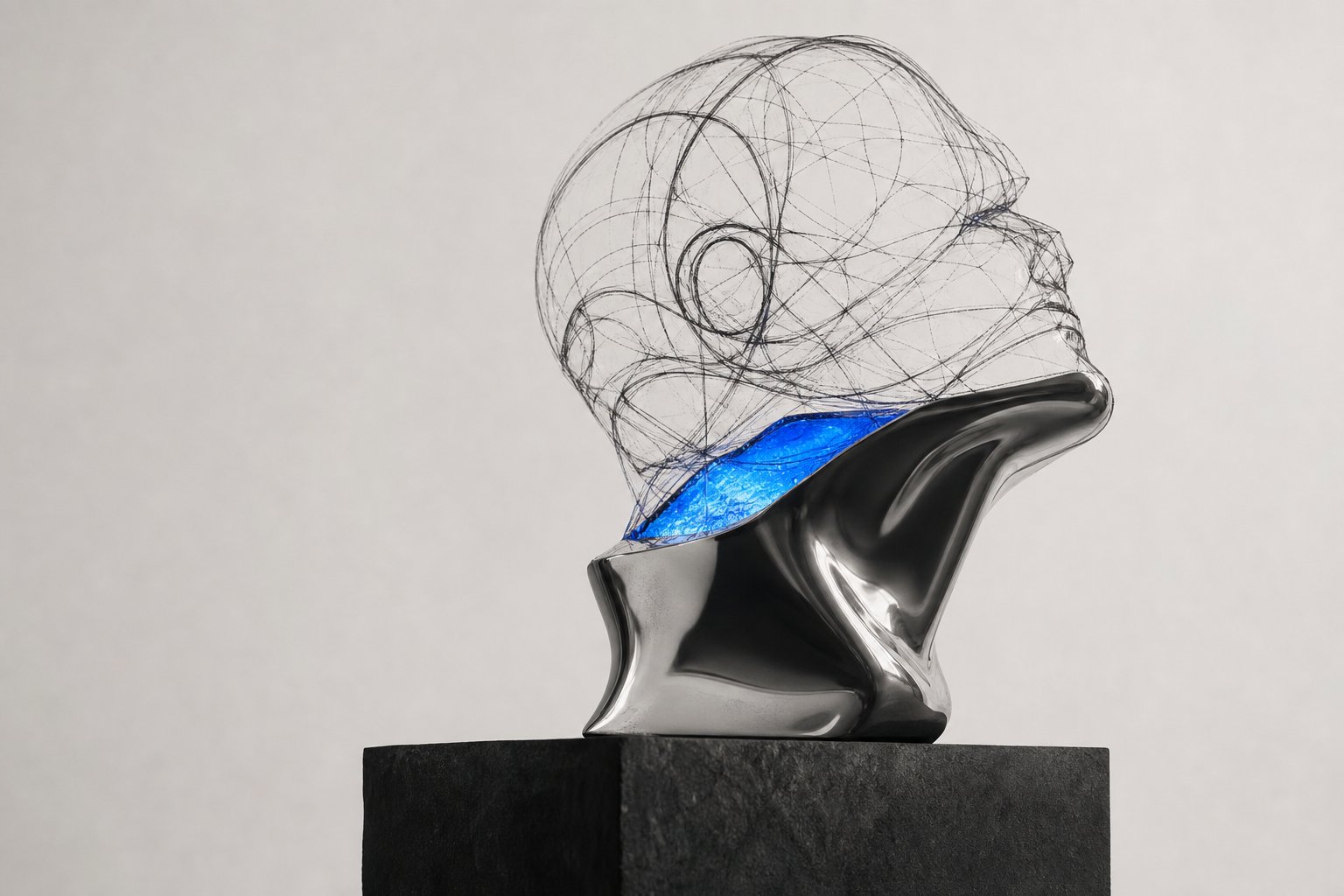
That signal is weakening. AI image models, procedural tools, real-time engines, template systems, and automated post-production compress the distance between average users and impressive surface quality. A polished image can now arrive before the idea has earned its form.
The study tracks one inversion: as surface becomes abundant, signal becomes the scarce material.
Surface is the finish layer:
- resolution
- material fidelity
- lighting quality
- render complexity
- production value
Signal is the conceptual layer:
- the claim
- the tension
- the framing
- the cultural reading
- the emotional memory
Polish still matters when it sharpens the idea, tests the material, or carries emotion. It becomes decorative noise when it hides the absence of a position.
Why It Matters
Visual production is accelerating faster than visual judgment. Automated and template-driven visual culture produces a flood of high-fidelity sameness: beautiful objects, cinematic lighting, detailed environments, perfect compositions — no position.
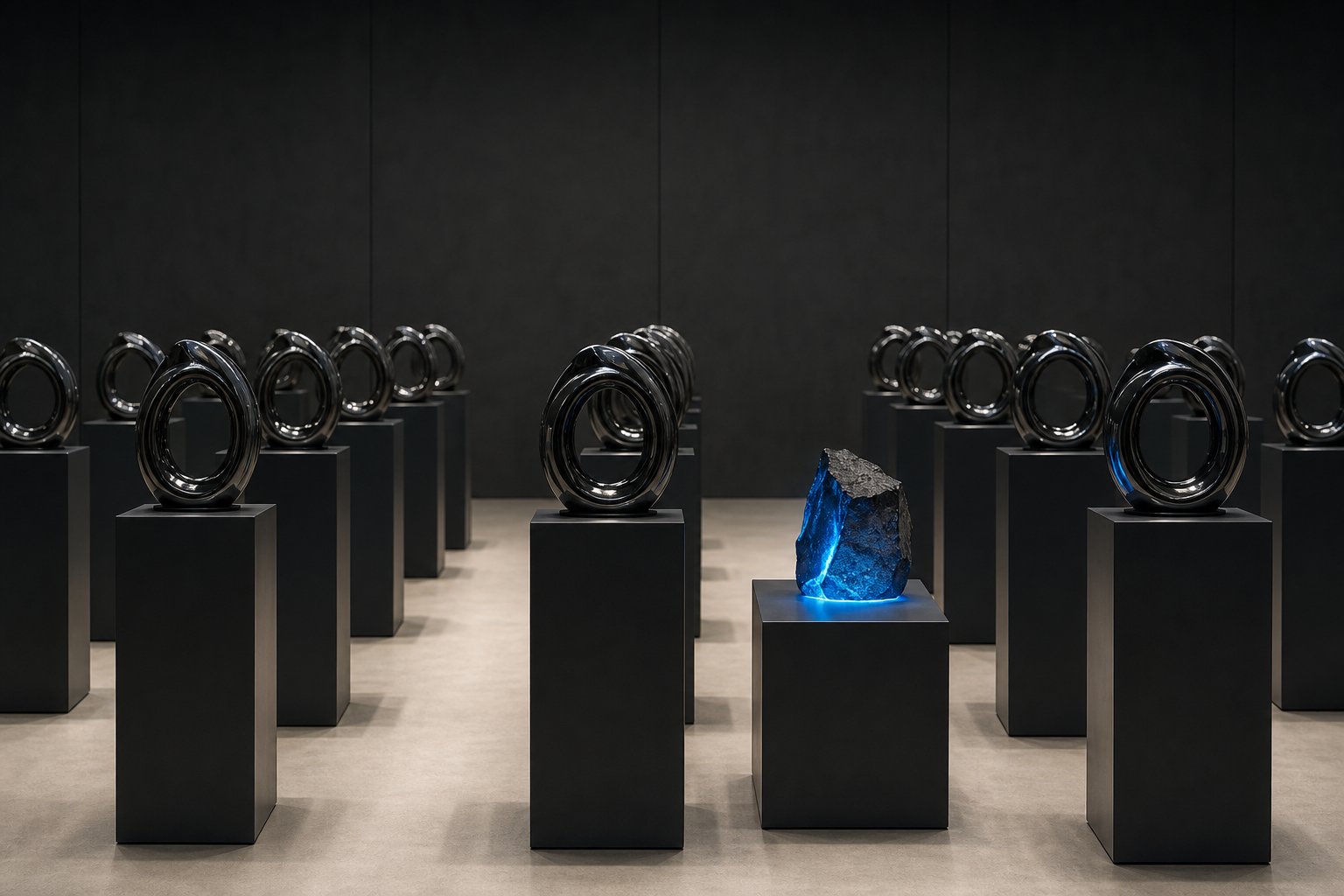
The danger is not that machines make images. The danger is mistaking finish for thought.
For artists, designers, and creative directors, the durable advantage becomes upstream authorship:
- choosing the problem before choosing the style
- designing symbols that survive medium changes
- compressing a worldview into one visual decision
- knowing what to remove, not only what to add
- making work that can be remembered in one sentence
A rough sketch with a strong proposition can outlive a flawless render with generic intent. The sketch contains direction. The render may contain only labor. In current conditions, labor is increasingly reproducible; direction is not.
How It Works
The project tests the distinction between execution value and ideation value through matched visual studies.
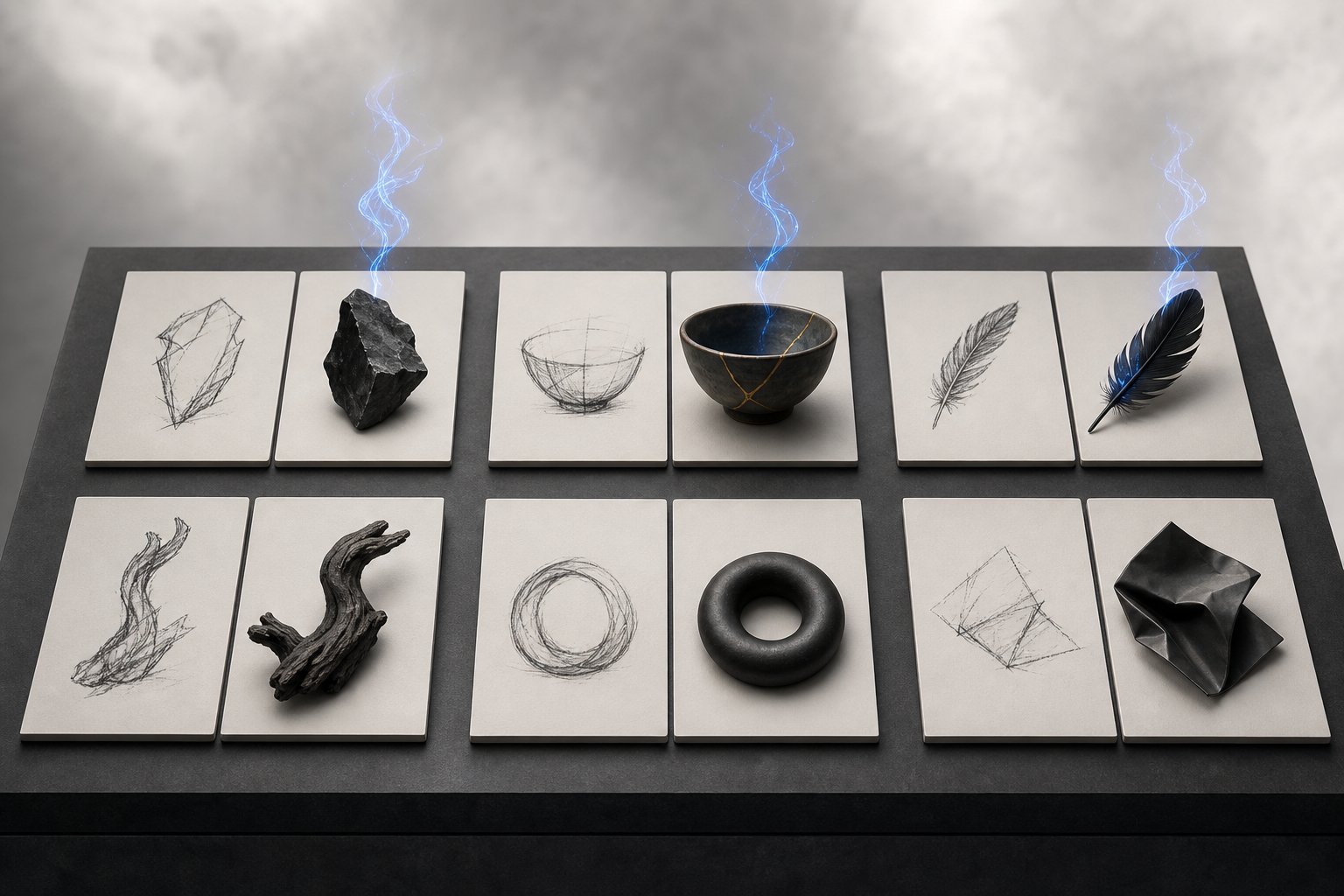
Create three types of pairs around the same subject categories:
-
Rough / high-signal
Minimal execution, strong premise, clear symbolic tension. -
Polished / low-signal
High render quality, generic composition, weak or interchangeable message. -
Polished / high-signal
Strong premise supported by precise execution.
Each study is judged by whether viewers can:
- summarize the work in one sentence
- recall the central image after 24 hours
- name the emotional or philosophical tension
- distinguish it from adjacent visual culture
- identify what would be lost if the style changed
The key benchmark is portability. If the idea survives as a sketch, render, sculpture, poster, or paragraph, it has signal. If it only works because of lighting, detail, and atmosphere, it is mostly surface.
Execution is not demoted. It is reframed as a meaning system, not a trophy. Material choices, camera language, scale, and finish can generate meaning; they fail only when they decorate an empty premise.
Next
Build a small Atlas proof titled Render Is Not the Idea.
Produce six controlled visual pairs:
- two rough/high-signal concepts
- two polished/low-signal concepts
- two polished/high-signal concepts
Use matched subject categories, similar composition scale, neutral presentation, and no explanatory captions. Show them blind to 10–20 viewers, then repeat recall after 24 hours.
Ask for three outputs: one-sentence recall, emotional read, and distinctiveness score.
The proof succeeds if high-signal works are remembered more clearly than low-signal polished works. The stronger version succeeds if polish improves recall only when the underlying idea is already strong.
Generation Prompts
Image Prompt
A refined symbolic art piece: a simple luminous charcoal drawing on translucent paper facing a flawless hollow chrome sculpture in a dark gallery space; electric blue light radiates from the imperfect drawing while the polished object stays cold and empty, cinematic photoreal clarity, sculptural lighting, minimal composition, no text.